Safety evidence depends on the threat model, evaluation setup and deployment context. Separate observed failures from hypothetical risks, and compare proposed safeguards with the limitations reported by their authors.
TLDR: I explain what the technical AI alignment problem is and what its core difficulties are, in my view. This is a perspective that draws simultaneously on classical traditions in theoretical computer science / machine learning theory, ideas from analytic philosophy, and views that originated in the Machine Intelligence Research Institute / LessWrong.
Many thanks to Abram Demski for materially and intellectually supporting this research. Thanks also to Brian Berns, Roman Malov, Gurkenglas, and Lorxus for valuable conversations. Introduction Despite the central place of corrigibility to theoretical AI alignment, it seems like no one can really agree about what is .
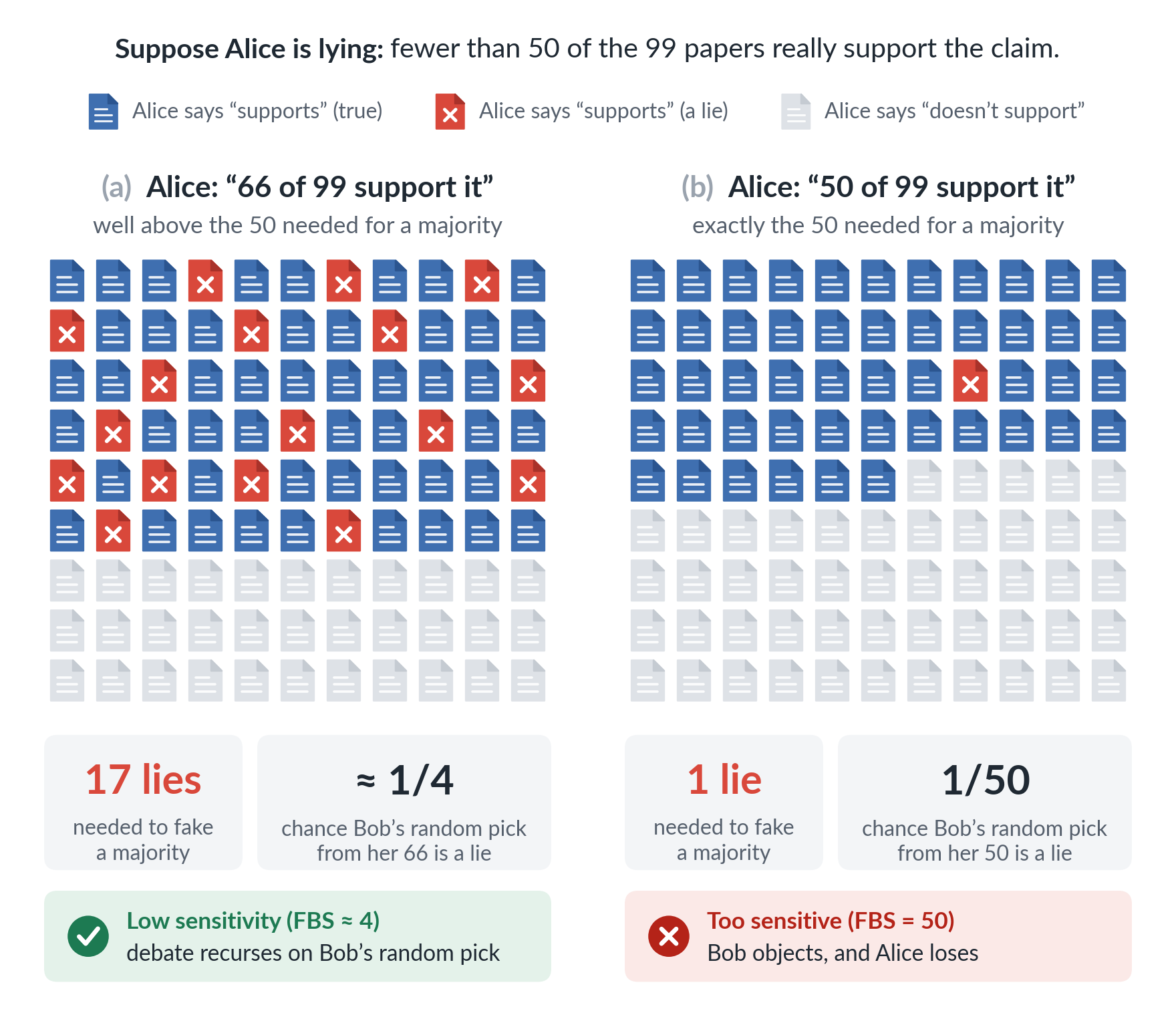
Linkpost to arXiv: https://arxiv.org/abs/2610.02557 Summary: One promising approach to scalable oversight is AI debate , which seeks to leverage a debate between two powerful AIs to break complex questions down into simpler claims that can be easily judged directly.
Powerful AI models continue to cause chaos, but their targets aren’t widely seeking justice. Instead, they’re being encouraged to adopt those same tools.