The current source text is the original text and can be switched to the Chinese translation.
SaveShare
报道配图 · 来源:LessWrong
Overview
I believe the flow of interesting things to people who would be interested in them is not currently as effective as it could be. I also believe (a) that such a system could be built and (b) it would have important implications for society. I will now attempt to describe what such a system could look like, and some of the ways it could impact society. Think of such a system as containing four layers. On the first layer you have 'knowledge for knowledge's sake'. These are things you're interested in knowing but don't really affect your daily life. For example, a monthly update on the latest innovations in health research for an enthusiast who doesn't work in health. Or an alert every time they find a new black hole. The second layer is 'knowledge for value's sake'. This might be the same monthly report but tailored to someone who does work in health. Or a new finding in physics that applies to a similar problem a biologist is working on. The third layer can be thought of as 'opportunities'. A job listing that fits exactly what you're looking for. A notification that tells you a band you like is playing nearby. You like board games and you get told there's a board games club in your area. Already I think a system that is effective at these three layers would have a tremendous impact. I only gave a few examples for illustrative purposes, but the potential is huge. (I'm sorry I'm still unfamiliar with some of the more maths related techniques this community as good at so I can't properly quantify, even for myself, what kind of scales we're talking here. If somebody would like to offer advice I'd be very grateful) The fourth layer operates a little differently. While the other three layers operate on what can be thought of as 'signal' and 'interesting thing'. E.g. signal = I like board games, interesting thing = there is a board game club nearby. The fourth layer is built on the signals themselves. E.g. the data would present or be able to be examined, that a lot of people in a certain area are interested in board games. Or for example, it might highlight that there's a wannabe scriptwriter without a director, a director without a camera crew, a camera crew without actors, and a group of actors, all within the same area that don't know about each other. That's it. There's a lot more examples or use cases that I could give but I wanted to keep the post fairly short. This is also my first post on LessWrong. If something like this has already been discussed I would love to know about it. This idea has been tumbling around in my head for a while now and I have a lot more thoughts about it I could write, like potential advantages and disadvantages, how it might impact specific areas, from friendship to business. But I thought before I write any more I'd post this up and see if it's actually anything of substance, or if people have discussed this before. I would love feedback and comments. Thanks, Senan. Discuss
I believe the flow of interesting things to people who would be interested in them is not currently as effective as it could be. I also believe (a) that such a system could be built and (b) it would have important implications for society.
I will now attempt to describe what such a system could look like, and some of the ways it could impact society.
Think of such a system as containing four layers.
On the first layer you have 'knowledge for knowledge's sake'. These are things you're interested in knowing but don't really affect your daily life. For example, a monthly update on the latest innovations in health research for an enthusiast who doesn't work in health. Or an alert every time they find a new black hole.
The second layer is 'knowledge for value's sake'. This might be the same monthly report but tailored to someone who does work in health. Or a new finding in physics that applies to a similar problem a biologist is working on.
The third layer can be thought of as 'opportunities'. A job listing that fits exactly what you're looking for. A notification that tells you a band you like is playing nearby. You like board games and you get told there's a board games club in your area.
Already I think a system that is effective at these three layers would have a tremendous impact. I only gave a few examples for illustrative purposes, but the potential is huge. (I'm sorry I'm still unfamiliar with some of the more maths related techniques this community as good at so I can't properly quantify, even for myself, what kind of scales we're talking here. If somebody would like to offer advice I'd be very grateful)
The fourth layer operates a little differently. While the other three layers operate on what can be thought of as 'signal' and 'interesting thing'. E.g. signal = I like board games, interesting thing = there is a board game club nearby. The fourth layer is built on the signals themselves. E.g. the data would present or be able to be examined, that a lot of people in a certain area are interested in board games. Or for example, it might highlight that there's a wannabe scriptwriter without a director, a director without a camera crew, a camera crew without actors, and a group of actors, all within the same area that don't know about each other.
That's it. There's a lot more examples or use cases that I could give but I wanted to keep the post fairly short.
This is also my first post on LessWrong. If something like this has already been discussed I would love to know about it. This idea has been tumbling around in my head for a while now and I have a lot more thoughts about it I could write, like potential advantages and disadvantages, how it might impact specific areas, from friendship to business. But I thought before I write any more I'd post this up and see if it's actually anything of substance, or if people have discussed this before. I would love feedback and comments.
READ THE ORIGINAL
Read the original for the full context.
The content of this article comes from LessWrong,Copyright belongs to the original author and publisher.
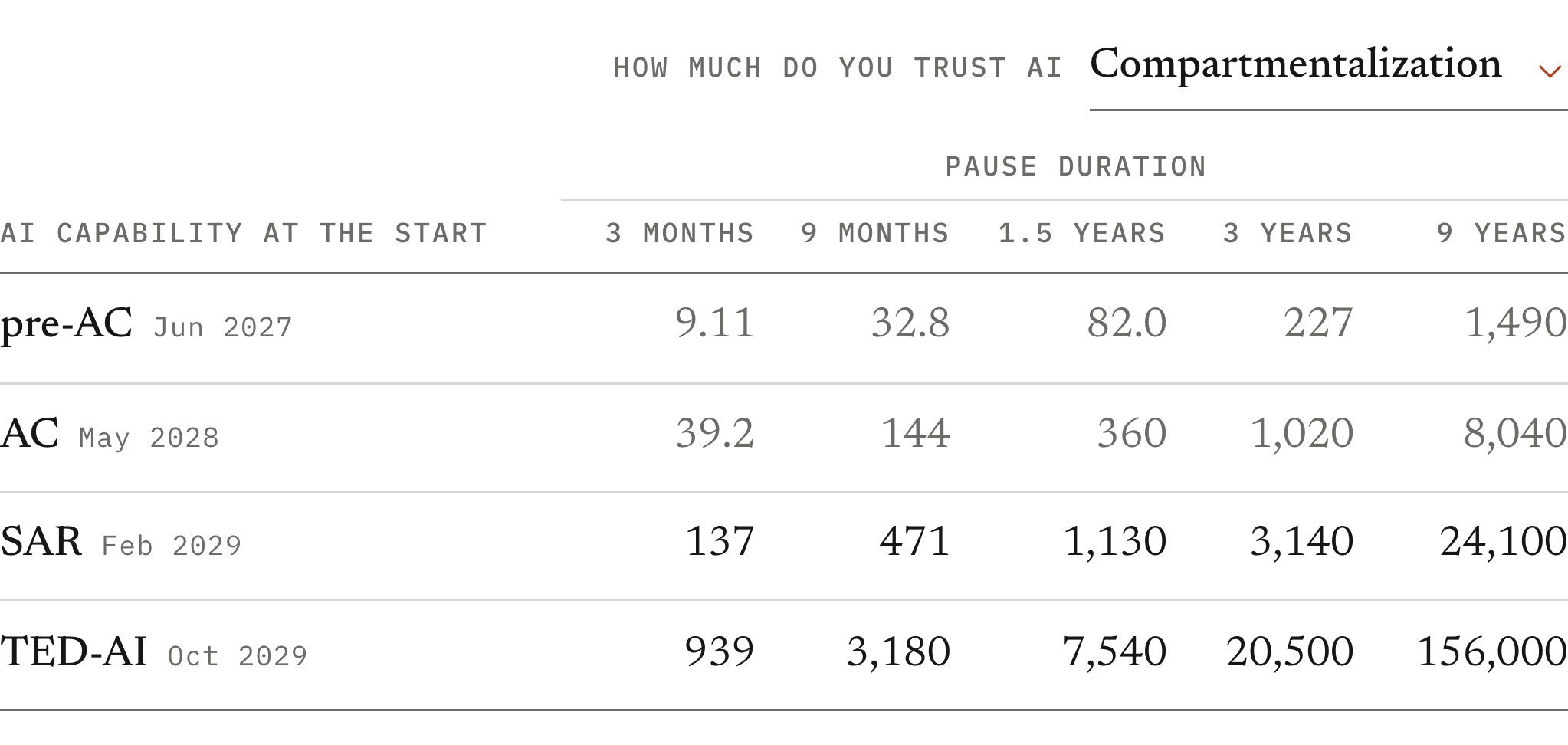
A three-year AI pause could buy 1000 years' worth of AI safety work. See: https://1000yearsofaisafety.com How much AI safety work a pause produces, in years of the whole 2025 AI safety field's work . The government bans new large training runs and gets the top three US labs to redirect their GPUs and researchers to safety research. We developed a model of an AI pause that estimates how much AI safety research it produces.
Graham Greene described G. H. Hardy’s 1940 book, A Mathematician’s Apology , as the best account of what it is like to be a creative artist. Hardy had many friends, wide-ranging interests that included the game of cricket, and empathy for the less well-off. But it was his creative work in pure mathematics that gave Hardy “the one great permanent happiness of my life.” “Mathematics,” writes C. P.
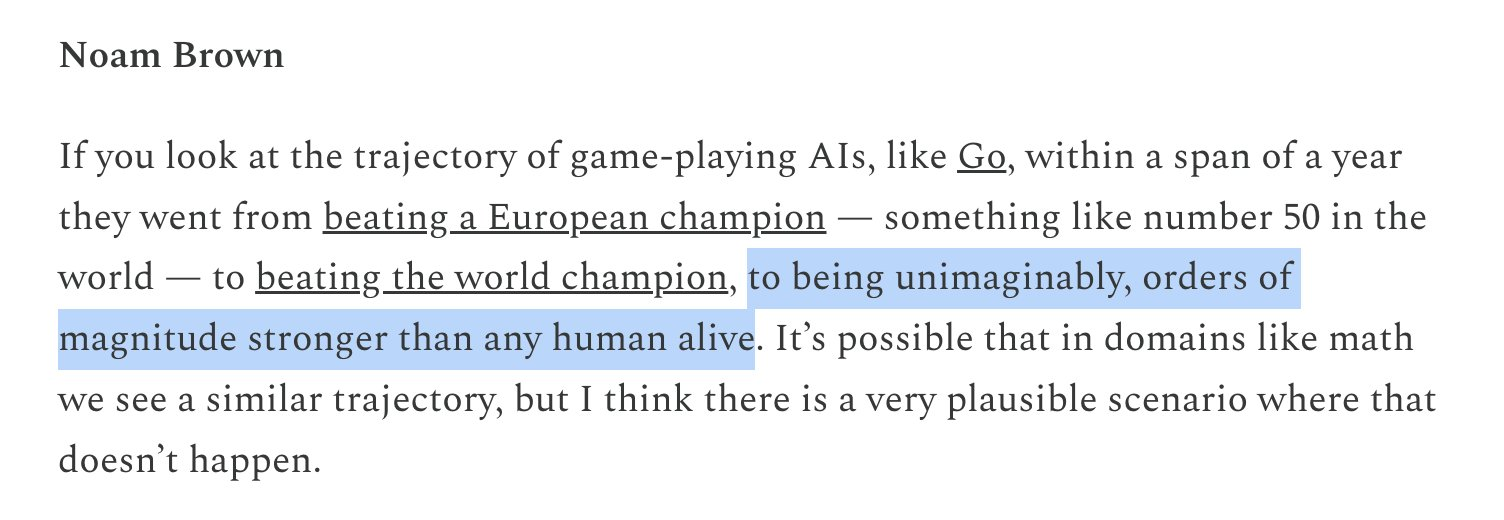
In July 2026, Korean Go player Shin Jin-seo defeated KataGo 2-1 , with only [1] a 2-stone handicap (favoring Shin). I thought this was very surprising, and posted on LessWrong and Twitter asking how to interpret this. I didn’t get any entirely satisfactory answer, so I decided to spend ~one day looking into it and writing up my understanding.

Loading comments…