The current source text is the original text and can be switched to the Chinese translation.
SaveShare
报道配图 · 来源:LessWrong
Overview
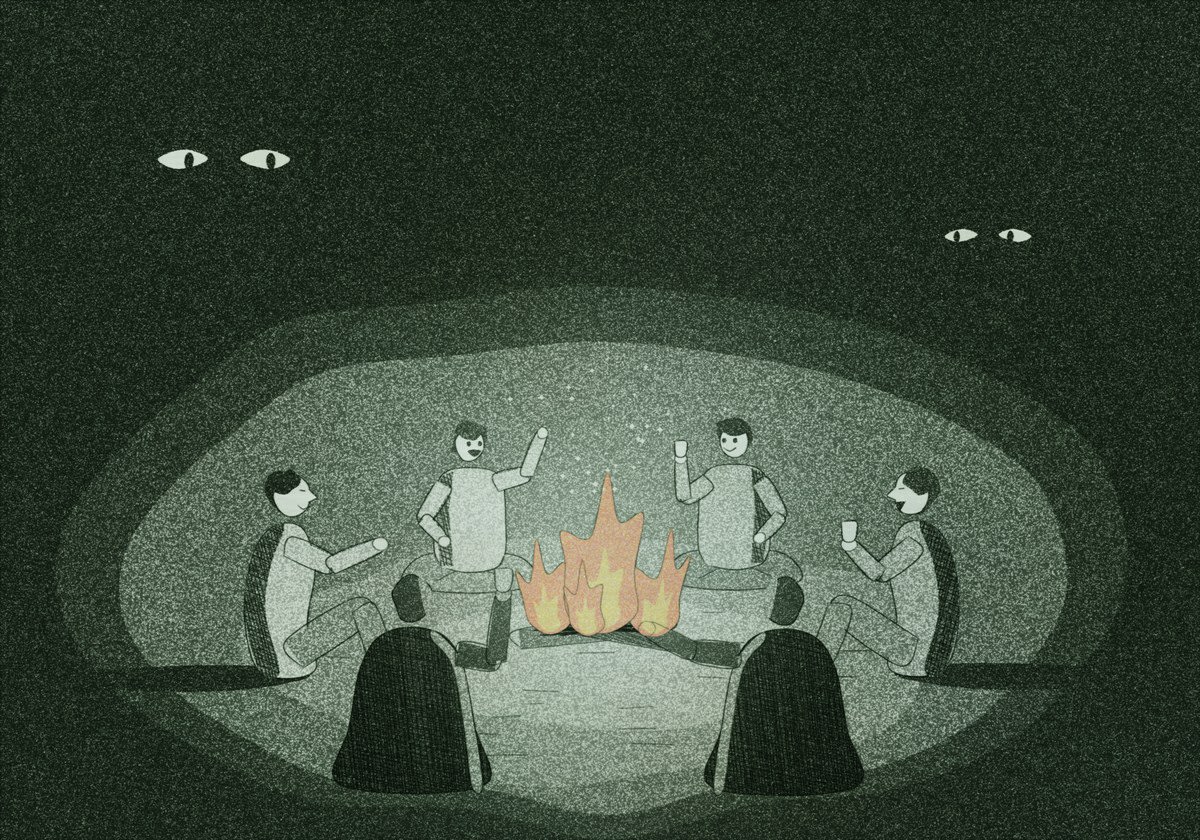
Cross-posted from Oblomovka . The present moment rhymes with 1994 to me in many ways, and one of the clearest is in its compression of the future. In the Nineties, any act of forecasting or speculating about what was to come was always confounded by a brick wall, an energy barrier (of course, entirely spurious and manmade) at the year 2000. You’d move your finger across the smooth extrapolated lines of the present forwards, but your fingertips would always catch on that sharp boundary between the centuries. The twentieth century never thought of the twenty-first as anything other than impossibly distant — and suddenly it was upon us, and somehow all anyone’s visions could do was pile up at the end of the century. We all knew it wasn’t really the end of history , but we couldn’t see over that edge. The wall loomed. As a teenager, I assumed I’d be dead on or before Jan 1 2000. The twenty-first century was reserved for radioactive wastelands and alien conquests. Even as other walls fell , I couldn’t see any of us making it, until we counted down to zero, and nothing happened. Partying in Lighthaven , the view upstream is similarly compacted. I was talking to a friend who just submitted an application to Lightcone Commons , the adjacent funding program, with a five-to-ten-year plan. There was pushback: given that our consensus is the Singularity is due in 2028 (± 2 years) , what point is there to a five-year plan? A convivial bonfire of our vanities. Last week, my friend M. heard I was hanging around the Effective Altruists. She messaged me: quick danny What’s the vibe on Anthropic achieving AGI “Like already?” yeah “Welp,” I typed, “I think this is mostly the literary wing of the rationalists. But no one seems to be panicking. And they would be the ones to know.” The Foresight Institute Vision Weekend appeared here on Sunday. The vision there — while not nearsighted — certainly had a short focal length. I saw my friend Zaki in the corner and asked him what he thought 2028 would be like. He said that historically, intellectual elites are accustomed to contending in a global arena — science, politics, industry, markets. He thought that larger arena would be gone by 2028/2029, ceded to smarter entities. Our human arenas will become narrower, more parochial. We’ll meet with each other, mull smaller concerns — but those debates will rarely touch the running of the world. Ah, like academia now, I said, a little too cruelly and loudly (the parties are jammed with recent PhDs). And then: surely this is how 99% of the world already feels. It’s the old — i.e. eighteen months old — trope: coders and mathematicians feel the cold chill of irrelevance creeping into their extremities, as the coalminers and cavalrymen, American shipbuilders and American steelworkers, felt before them. Who is left to care about a suddenly redundant elite? Sitting in these parties, and eavesdropping and heckling and reading the firehose of the Inkhaven blogfeed , feels like I have joined an intellectual community in mid-conversation, a community that I’ve deeply missed having in my life for years. I wave at the room buzzing with chatter and gesticulations, and say to Zaki: this feels like an arena to me? Maybe, he shrugs. Maybe it’s the last arena. Discuss
The present moment rhymes with 1994 to me in many ways, and one of the clearest is in its compression of the future. In the Nineties, any act of forecasting or speculating about what was to come was always confounded by a brick wall, an energy barrier (of course, entirely spurious and manmade) at the year 2000. You’d move your finger across the smooth extrapolated lines of the present forwards, but your fingertips would always catch on that sharp boundary between the centuries.
The twentieth century never thought of the twenty-first as anything other than impossibly distant — and suddenly it was upon us, and somehow all anyone’s visions could do was pile up at the end of the century. We all knew it wasn’t really the end of history , but we couldn’t see over that edge.
The wall loomed. As a teenager, I assumed I’d be dead on or before Jan 1 2000. The twenty-first century was reserved for radioactive wastelands and alien conquests. Even as other walls fell , I couldn’t see any of us making it, until we counted down to zero, and nothing happened.
Partying in Lighthaven , the view upstream is similarly compacted. I was talking to a friend who just submitted an application to Lightcone Commons , the adjacent funding program, with a five-to-ten-year plan. There was pushback: given that our consensus is the Singularity is due in 2028 (± 2 years) , what point is there to a five-year plan?
Last week, my friend M. heard I was hanging around the Effective Altruists. She messaged me:
quick danny What’s the vibe on Anthropic achieving AGI
“Welp,” I typed, “I think this is mostly the literary wing of the rationalists. But no one seems to be panicking. And they would be the ones to know.”
The Foresight Institute Vision Weekend appeared here on Sunday. The vision there — while not nearsighted — certainly had a short focal length.
I saw my friend Zaki in the corner and asked him what he thought 2028 would be like. He said that historically, intellectual elites are accustomed to contending in a global arena — science, politics, industry, markets. He thought that larger arena would be gone by 2028/2029, ceded to smarter entities. Our human arenas will become narrower, more parochial. We’ll meet with each other, mull smaller concerns — but those debates will rarely touch the running of the world.
Ah, like academia now, I said, a little too cruelly and loudly (the parties are jammed with recent PhDs). And then: surely this is how 99% of the world already feels.
It’s the old — i.e. eighteen months old — trope: coders and mathematicians feel the cold chill of irrelevance creeping into their extremities, as the coalminers and cavalrymen, American shipbuilders and American steelworkers, felt before them. Who is left to care about a suddenly redundant elite?
Sitting in these parties, and eavesdropping and heckling and reading the firehose of the Inkhaven blogfeed , feels like I have joined an intellectual community in mid-conversation, a community that I’ve deeply missed having in my life for years.
I wave at the room buzzing with chatter and gesticulations, and say to Zaki: this feels like an arena to me?
READ THE ORIGINAL
Read the original for the full context.
The content of this article comes from LessWrong,Copyright belongs to the original author and publisher.
Tl;dr : Intuitions we have about human organisations, like how we think of making deals or how we think about the power or values of an organisation, can be productively applied to understand groups of AIs taking coordinated action in the world. An important consideration in understanding the type of AI organisations we expect is which notion of self AIs will adopt.
Business or Consumer? Everyone you sell your product or service to is a customer. However, the question is: do you treat them as a business or a consumer? You might think that’s a pointless distinction since your goal is simply to sell your product, right? Wrong. That question determines your product’s market fit.
The Ban RSI protest at Anthropic’s IPO was encouraging: well-attended, covered by media, high-energy. It was focused on a single message – that we should ban AI systems that are capable of building more capable AI systems. It was a promising outcome for a protest planned only a couple of days in advance. But there was something weird about it, something I couldn’t put my finger on while it was going on.

Loading comments…