Friday, October 16, 2026 Can AI design new life forms? In 2025, Stanford University PhD student Samuel King came up with a preliminary answer when he used a generative AI model to propose genetic blueprints for microscopic viruses. It isn’t yet an example of AI-generated life, but that could be next. Join senior AI reporter…
If there is any place that would be off-limits to AI, the control room of a nuclear power plant certainly sounds like one. The nuclear industry is historically cautious and risk averse—understandable given the possible catastrophic consequences of an accident or a mistake. Even well-trained managers struggle with the operational complexity of a nuclear reactor.
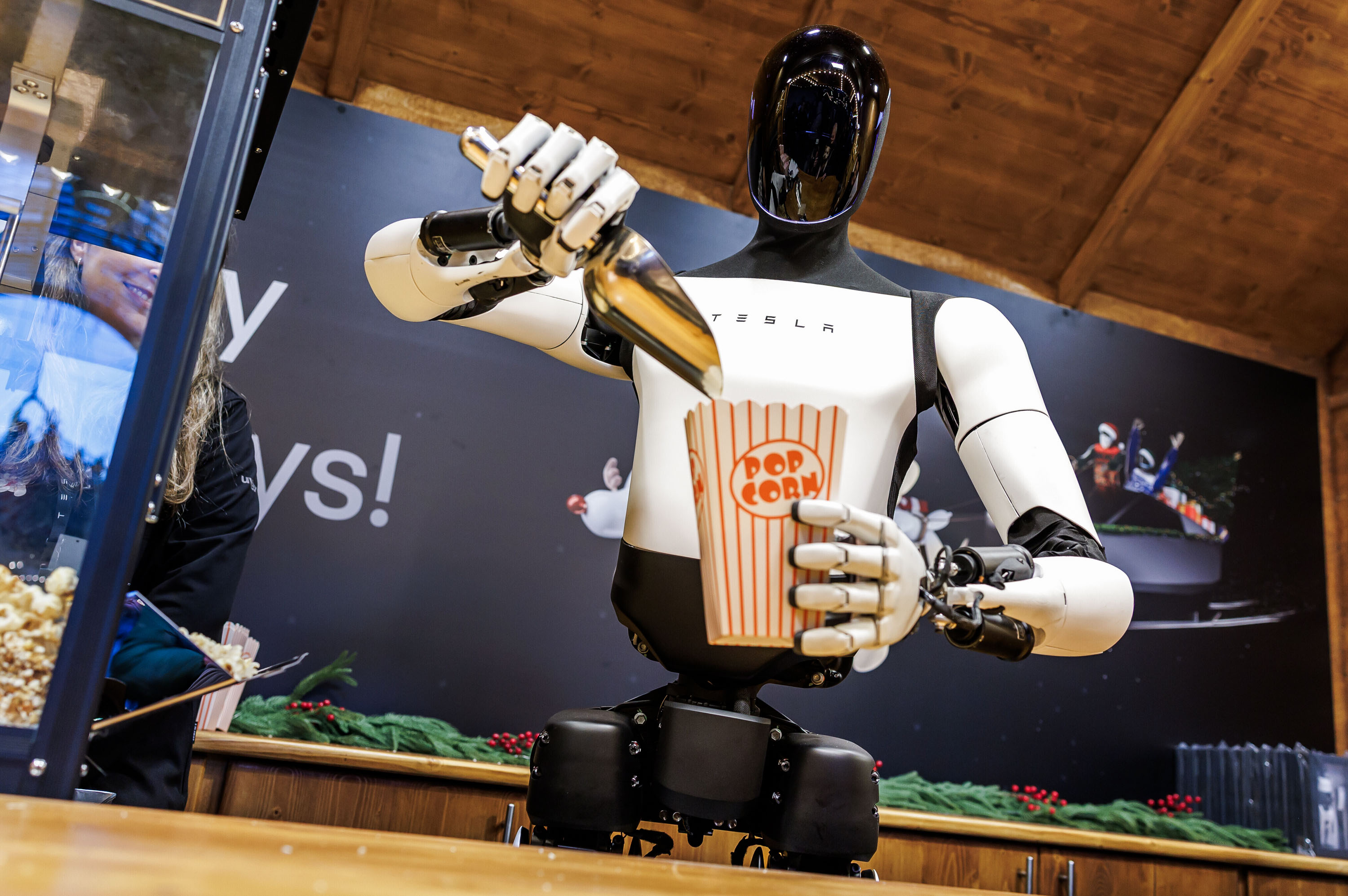
From experimental demonstrations to real-world deployment, robots still face complex engineering challenges. "MIT Technology Review" examines the distance between technological progress and implementation.
Industrial AI is entering a new phase. After decades of predictive analytics and other specialized applications, advances in foundation models, physical AI, and agentic AI are making it possible to automate more complex tasks across industrial environments. But unlike AI that operates purely in the digital world, industrial AI can interact directly with physical systems,…
This White Paper gives robotics researchers and engineers an overview of a new large-scale motion capture dataset built to close the data gap limiting humanoid robot learning. It also shows how policies trained on the dataset transfer to a real humanoid robot.