AI Agent News: Tools, Workflows & Evaluation — Page 6
From coding assistants to collaborative systems: what agents can do, and where they fall short.
Read this field in context
An agent chooses actions and tools in pursuit of a goal; a workflow follows a more predefined path. Reliable deployment needs clear permissions, observable results and a way to stop or escalate when a step fails.
On October 13, 2026, STEPX Neo, the first large-model native smart phone under the large-model native AI terminal brand STEPX (Step Terminal), was officially released.
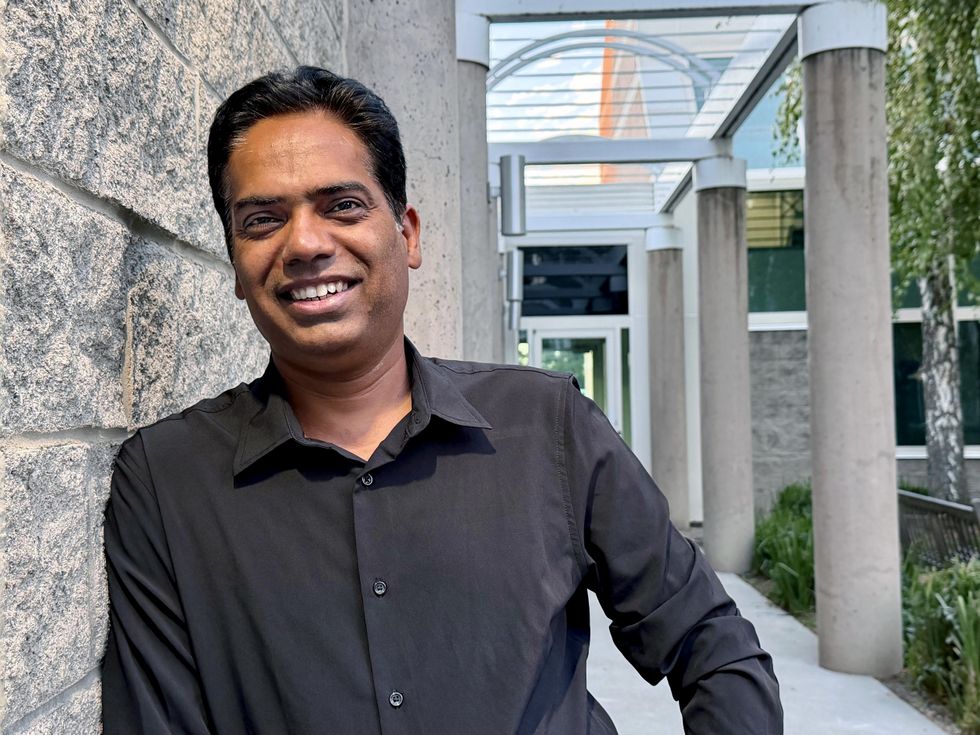
If you’ve ever wondered how Claude and similar AI agents can answer complex questions in seconds and where they get the information, you’re not alone. Gurmeet Saran works to find that answer every day as an engineer at Anthropic in San Francisco, the AI research company behind Claude.
Industrial AI is entering a new phase. After decades of predictive analytics and other specialized applications, advances in foundation models, physical AI, and agentic AI are making it possible to automate more complex tasks across industrial environments. But unlike AI that operates purely in the digital world, industrial AI can interact directly with physical systems,…
When multiple agents work together, the dependence, collaboration, and management between systems are becoming issues that enterprises need to face when deploying AI.
Preface This essay argues that rational people don’t have goals, and that rational AIs shouldn’t have goals. Human actions are rational not because we direct them at some final ‘goals,’ but because we align actions to practices [1] : networks of actions, action-dispositions, action-evaluation criteria,
"In projecting language back as the model for thought, we lose sight of the tacit embodied understanding that undergirds our intelligence." –Terry Winograd The recent successes of generative AI models have convinced some that AGI is imminent. While these models appear to capture the essence of human
LLM-based chatbots’ capabilities have been advancing every month. These improvements are mostly measured by benchmarks like MMLU, HumanEval, and MATH (e.g. sonnet 3.5, gpt-4o). However, as these measures get more and more saturated, is user experience increasing in proportion to these scores? If we envision a future
Introduction Imagine yourself a decade ago, jumping directly into the present shock of conversing naturally with an encyclopedic AI that crafts images, writes code, and debates philosophy. Won’t this technology almost certainly transform society — and hasn’t AI’s impact on us so far been
The AI revolution drove frenzied investment in both private and public companies and captured the public’s imagination in 2023. Transformational consumer products like ChatGPT are powered by Large Language Models (LLMs) that excel at modeling sequences of tokens that represent words or parts of words [2]. Amazingly, structural