OverviewIntroduction (Narrator Voice, Morgan Freeman): Gnerk sat there thinking deeply about the recent swarm attacks. Gnerk might not be the smartest tool in the shed but he had pointed the dull tools he had at this problem for a long time. He had the tools of spectral graph theory at hand. “Do you ever dream about information flow on top of graphs and how they relate to general agency? Well, I do, probably to a worrying extent. Many People say swarm scary, Gnerk Know Thing about swarm so Gnerk share. Scale Free Agency , Hierarchical Agency , Multi-Agent Systems, Cooperative AI. To know if group is coordinated we need to know when group act the same. Are there any group size based scaling laws we can make? Gnerk share model. By end, you see methods from physics to couple graph structure to time for information flow in a group. You see graph laplacian and information flow on multi-agent systems. You see Fiedler value and how it bound collective speed. You also see graph structure matter. We introduce smart tool for bounding size of collective agent through physics and explain part of physics - energy relation. Gnerk like direction, Gnerk still somewhat early in figuring out, therefore Gnerk share as Gnerk.” (Narrator Voice, Morgan Freeman): And so began the adventure of Gnerk. Agents are think-do loops One agent work with other agent, make big agent, agent swarm scary, agent swarm maybe bad ? Hmmm… Not goood. What bound size of BIG agent? (Agent swarm) Hmmmm… How agent work in general? (This is example of way of seeing not all information.) They loop, hmmm but that is for one agent, how shared agent loop? Figure: General Policy Improvement Loop from RL and Perception Action Loop from Active Inference. Big Agent Representation Okay, I smart. One agent = Blob Many agent = many Blob Okay, hmmmm, when Many Agent = One Agent? Intentional stance , if Many Agent quack like a One Agent, walk like a One Agent, act like a One Agent, it’s probably a One Agent. Ah okay, cool. Go back to cool improvement picture. Any smort agent do think then do then think then do and so on. Okay, so Many Agent has to think then do like One Agent. How? This same picture but in time domain. Okay, if Many Agent = One Agent then every Small Agent in Many Agent needs to act the same. If have n agents, think (world model) and do (action policy) has to be coupled. This is our stupid definition, stupid definition is ok. Yes, action not fully coupled but for sake of simplifying argument we say it is our definition. (π1 = π2 = π3 = … πn ) [ (Technical Narrator, Michio Kaku) : The definition of a large scale coherent agent is then if the action policies are the same for everyone in the group. Yes, this is a very restrictive definition, which according to Gnerk will potentially be addressed in a future post.] Okay but no many interesting yet, obvious so far. Soon cool, don’t worry. Give example, now yes? (Narrator Voice, Morgan Freeman): And so Gnerk has arrived at a somewhat simple initial definition of group action. But wait, what is that sneaking up in the corner, one of the jewels of the fauna of the research post, an example… AHHH, SNAKE! “AHHH, SNAKE!” “SNAKE!” Figure: “SNAKE!” spread in group. If one get information then who hear is important to spread to rest. If one see snake, it take 4 time for everyone to see snake, what if snake bite after 3 second? Then Many Agent not equal One Agent from snake perspective. Criteria: From policy perspective, Many Agent = One Agent if model + action converge in time. If think -> do slower than external action for any part of agent, more than one model needed from snake perspective. We assume agent observer dependent. [ (Technical Narrator, Michio Kaku) : If Alice has no information about the snake then she cannot have the same action policy as Bob, therefore they do not have the same action policy when it comes to the snake.] This called “ Big Agent Timescale ”: Okay but problem! Human have cells, they Small Agent make Big Agent, cells don’t act the same, how this work? Well, this is stupid model, basic model, Many Agent = One Agent has problem. Is coupled to emergence, when many small create big that’s bigger than the combined small. Gnerk have good example of emergence. Meal of potato, (vegetarian) chicken pops and sauce better than eating first potato, then chicken pops then sauce. The whole more than sum of parts! This picture true for more simple collective agent definition, I stupid so I work from case by case. Okay but how I know timescale? Vibes, literally. Synchronisation Limits in Groups Okay, we want to know how to limit group dependent on information flow. Okay, I have friend, he’s stupid smart like me. We have good understanding. Strong bond. Figure: Strong Friend vibe Okay, I also have other friend, he smart smart, less vibe. Figure: Weak Friend vibe So what happen in group? Well, we all have vibe couplings. Vibe coupling make communication, communication is amount of information that flows between us. What happen when set of coupled vibratory nodes? GIF: A coupled spring system. This area, called Graph Signal Processing (GSP), is nice. In our model it’s about how I can vibe with different people, the more I vibe with them the quicker the information can spread in the system. Gnerk’s mom interrupts (Narrator Voice, Morgan Freeman): As a convenient plot device, Gnerk’s mother now comes in with a question to develop the post. “Gneeeeerk, you did not explain the coupling between GSP and information! Your readers are going to wonder why you’re applying physics models to information processing systems!” “Okay, mama, I explain.” Gnerk apologise, Gnerk forgot to explain coupling between physics and information theory. Gnerk want to point out sociophysics as cool area applying physics to group behaviour. Also is stupid because no deeper model of underlying behaviour. Gnerk work on active inference model of this, difficult but is ok. Like paper like Free Energy Equilibria , is good. Okay now picture! Gnerk short explanation here. Basic, energy of spring coupled with bit size of message, more complicated message = more energy, spring work on energy. Deep connection between physics and information theory, many smart people say, ask big model if need more here. Big model smarter than Gnerk. Say “Hello big model, how information and energy coupled in signal processing?”, it help. Gnerk explains fourier analysis on graphs + graph laplacians Okay, at this point we getting a bit complicated. Remember snake? One see snake. One scream. Scream go friend to friend to friend. Everyone hear quick. Good. But hear not enough! Now group need agree: run left? Run right? Climb tree? Bob say left. Alice say tree. Timmy say right. Each one look at friends, move little bit toward what friends think. Again. Again. Slowly everyone think same. Springs same thing! Pluck one ball = one friend think different. Ball pull on neighbour, neighbour pull on next, wobble go through springs. Slowly everyone settle in same place. Then calm. Calm = agree. Scream reach everyone fast. Everyone agree is slow part. Vibe table is about the agree part. Many Agent only do same when think same. Many Agent only think same when wobble calm down. So think-do loop of Many Agent only as fast as group calm down. In human: hearing news is fast. Agreeing what to do about news is slow. Group only one agent as fast as group can agree. Okay, but many springs, many vibes, big mess. How keep track? Easy. Big table. Everyone get row, everyone get column, put vibe strength in box with minus sign. On diagonal, put my total vibe. Smart people call this graph Laplacian . I call it vibe table. Vibe table cool. Look at vibe table, know how fast group agree. No need watch group wobble. Table already know. So now have bridge: wiring → vibe table → how fast group agree → how fast group can be one agent. Example to make easier! Okay, example. You. You Many Agent. Lots of brain cells (neurons). Each small agent. How they talk? Two ways: Chemical way. Neuron spit chemical, other neuron catch chemical. Bit slow. But smart: can make signal bigger, smaller, flip it, learn. Electric way. Neurons hold hands (gap junction). Electricity go straight through. Super fast. But dumb: just copy. Where nature use fast dumb way? Where need act together, NOW. Crayfish run from danger use electric signal. Heart, simple quick signal, all heart cells squeeze together, use electric. Remember AHHH, SNAKE! Slow bad. Whole body need agree on RUN fast. Need strong vibe. So snake: you one agent. Heart, legs, breath, all go same time. But cookie or go run? Now you committee. Parts of you want different thing. Argue for weeks. Many agent. Hmmm, wait. Slow thing should be easier? More time to agree? No. Because not one graph! Different message go on different wire. “RUN” is simple message, go on fast dumb wire. “What do with life” is big messy message, go on slow smart wire. Every message have own speed. Fast wire: one agent about snake. Slow wire: many agent about cookie. Okay, but how vibe table know speed? Table hide main vibes inside. Eigenmodes When we have systems that vibe, we have something called main modes. This is the main vibes we have, if we imagine that we have group of coupled springs then they will oscillate according to a cool wave: Figure: Graph from MathIsFun Each main vibe is one pattern of disagreement in group. Some pattern die fast, some die slow. Slowest one = how long group need to agree. [ (Technical Narrator, Michio Kaku) : The graph Laplacian is symmetric and positive semidefinite, which means it has an eigenbasis, for you math people out there. Any group where vibe goes both ways can be written as a vibe table, so this is quite generally applicable.] In human: The math is nice so we can decouple the system into the main ways in which the system vibes. Figure: Pluck one ball. Ball wobble (red) = few simple vibes added together. Fast vibe die quick. Slow vibe last longest. Slowest vibe = Big Agent Timescale. (Springs bit sticky, so fast wobble die first. Otherwise wobble forever.) Each simple vibe is one way whole group can wobble. Group wobble is never anything else, only these vibes added up. That the eigenbasis thing. Math people happy. This is a coupling from the way the system is setup to the time dimension of the system, in other words it allows us to couple the size of a system, the information flow of a system and the timescales in which the system can operate. So two thing set speed. Wiring: how many hop-slow group is (main vibes, λ₂). Message: how slow each hop is. Small message, fast dumb wire. Big message, slow smart wire. Gnerk guess: multiply. (Real math in future post.) Remember mama? Bigger message = more bits = more energy. Spring only carry so much energy each wobble. So big message need many wobble, more time, every hop. That why cookie slow even with good wiring. Small "RUN" fit in one wobble, go fast. Okay, so how long group need to agree? Three things: How different everyone think at start. Simple model like electric and springs no big deal, difficult model like society big deal. If no share model then big wrong when talk to someone, if someone says “murdering children good” and you think “murdering children bad”, long time to talk. Electric signal easier to resolve. How much vibe. More vibe, faster. But only if vibe go to weak spot. One weak link slow whole group. Example, company need know important information but, manager job on line so manager don’t share. Information don’t go, company sad. How big group, how wired. Bigger group, slower. How much slower? Depend on wiring. Market fast wiring, big bureaucracy slow wiring. Group = One Agent about thing if: time to agree < time thing give you. Snake bite in 3 second, group agree in 4 second: not one agent. Group agree in 1 second: one agent. Wiring matter most: Circle : double group, four times slower. bad. Grid : double group, two times slower. Well mixed (few friends each, spread out): double group, almost same speed! Nice. Everyone talk to everyone: fast, but everyone talk all day, no time do anything. (Real math in future post, for smart people. Many internal paper drafts can share if wanted.) So, want big group act as one, fast? Three things can do: more vibe, better wiring, smaller group. Real world do all three. Startup. 5 people, everyone talk everyone, fast. 50 people, too much talk, nobody keep up. So make boss tree. Boss = hub. Fast, but boss get stuck. Amazon. Small teams (two pizza feed whole team). Teams talk through fixed rules, not meetings. Company give up being one agent about small stuff. Each team one agent. Company one agent only about slow stuff. Gore (company that make Gore-Tex): keep each building around 150 people. Too big? New building. Size limit, as company rule. Army. Small team inside bigger team inside bigger team. And trick: tell everyone plan before fight. Then everyone already agree when snake come. No wait. Culture = agree in advance. Fire alarm. One person talk to everyone at once, for a moment. Group suddenly fast. Starlings (birds). Each bird watch about 7 neighbours. Whole flock turn together. Good transmission speed. Good when snake is falcon. Same trick everywhere. Pick how fast need be one agent. Pick wiring and size that fit. Everything faster, small agents do alone. Conclusion SNAKE AHH! -> Action = Avoid Snake AHHH! Dependent on graph since snake attack in 3 second, if 4 second for group to agree snake, group not act like other people. Different graph give different speed of information. Example is bird, look at 7 neighbours. Good for avoiding falcon. Good graph theoretic spread rate. Graph topology matter for collective intelligence and coherence of action. Thank you. Gnerk finds this complicated topic to explain, Gnerk try his best. Gnerk think this area cool since it talk about information theory of coherence of multi-agent systems. Details matter but big cool is structure -> time coupling. Structure to time coupling matter due to feedback loops and coherent actions happen in time. ( Narrator voice, Freeman but in a hopeful ending tone ): And so ends the story of Gnerk, he looked at the speed of swarms through graphs. Although his model is simplistic it points out a direction to go with future research on collective agency for the speed has to be coupled to the flow of information in the system. In his own strange way Gnerk has tried to point out where he is going, the question is if he will keep walking? Discuss
(Narrator Voice, Morgan Freeman): Gnerk sat there thinking deeply about the recent swarm attacks. Gnerk might not be the smartest tool in the shed but he had pointed the dull tools he had at this problem for a long time. He had the tools of spectral graph theory at hand.
“Do you ever dream about information flow on top of graphs and how they relate to general agency?
Many People say swarm scary, Gnerk Know Thing about swarm so Gnerk share.
Scale Free Agency , Hierarchical Agency , Multi-Agent Systems, Cooperative AI.
To know if group is coordinated we need to know when group act the same. Are there any group size based scaling laws we can make? Gnerk share model.
By end, you see methods from physics to couple graph structure to time for information flow in a group. You see graph laplacian and information flow on multi-agent systems. You see Fiedler value and how it bound collective speed.
You also see graph structure matter. We introduce smart tool for bounding size of collective agent through physics and explain part of physics - energy relation.
Gnerk like direction, Gnerk still somewhat early in figuring out, therefore Gnerk share as Gnerk.”
(Narrator Voice, Morgan Freeman): And so began the adventure of Gnerk.
One agent work with other agent, make big agent, agent swarm scary, agent swarm maybe bad ?
(This is example of way of seeing not all information.)
They loop, hmmm but that is for one agent, how shared agent loop?
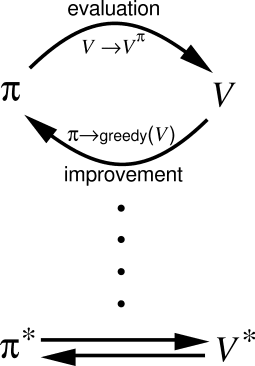
Figure: General Policy Improvement Loop from RL and Perception Action Loop from Active Inference.
Intentional stance , if Many Agent quack like a One Agent, walk like a One Agent, act like a One Agent, it’s probably a One Agent.
Go back to cool improvement picture. Any smort agent do think then do then think then do and so on.
Okay, so Many Agent has to think then do like One Agent. How?
This same picture but in time domain. Okay, if Many Agent = One Agent then every Small Agent in Many Agent needs to act the same.
If have n agents, think (world model) and do (action policy) has to be coupled. This is our stupid definition, stupid definition is ok. Yes, action not fully coupled but for sake of simplifying argument we say it is our definition.
[ (Technical Narrator, Michio Kaku) : The definition of a large scale coherent agent is then if the action policies are the same for everyone in the group. Yes, this is a very restrictive definition, which according to Gnerk will potentially be addressed in a future post.]
Okay but no many interesting yet, obvious so far. Soon cool, don’t worry. Give example, now yes?
(Narrator Voice, Morgan Freeman): And so Gnerk has arrived at a somewhat simple initial definition of group action. But wait, what is that sneaking up in the corner, one of the jewels of the fauna of the research post, an example…
Figure: “SNAKE!” spread in group. If one get information then who hear is important to spread to rest.
If one see snake, it take 4 time for everyone to see snake, what if snake bite after 3 second?
Then Many Agent not equal One Agent from snake perspective.
Criteria: From policy perspective, Many Agent = One Agent if model + action converge in time.
If think -> do slower than external action for any part of agent, more than one model needed from snake perspective. We assume agent observer dependent.
[ (Technical Narrator, Michio Kaku) : If Alice has no information about the snake then she cannot have the same action policy as Bob, therefore they do not have the same action policy when it comes to the snake.]
Human have cells, they Small Agent make Big Agent, cells don’t act the same, how this work?
Well, this is stupid model, basic model, Many Agent = One Agent has problem.
Is coupled to emergence, when many small create big that’s bigger than the combined small.
Gnerk have good example of emergence. Meal of potato, (vegetarian) chicken pops and sauce better than eating first potato, then chicken pops then sauce. The whole more than sum of parts!
This picture true for more simple collective agent definition, I stupid so I work from case by case.
Okay, we want to know how to limit group dependent on information flow.
Okay, I have friend, he’s stupid smart like me. We have good understanding. Strong bond.
Okay, I also have other friend, he smart smart, less vibe.
So what happen in group? Well, we all have vibe couplings. Vibe coupling make communication, communication is amount of information that flows between us.
What happen when set of coupled vibratory nodes?
This area, called Graph Signal Processing (GSP), is nice. In our model it’s about how I can vibe with different people, the more I vibe with them the quicker the information can spread in the system.
(Narrator Voice, Morgan Freeman): As a convenient plot device, Gnerk’s mother now comes in with a question to develop the post.
“Gneeeeerk, you did not explain the coupling between GSP and information! Your readers are going to wonder why you’re applying physics models to information processing systems!”

Loading comments…