China tech
From 100-bit chips to complete machine delivery, this quantum computing company is pushing quantum computing power into callable services
Simultaneously build a kilobit-scale quantum computing power cloud platform
Watching AI evolve.
Understanding what comes next.
From coding assistants to collaborative systems: what agents can do, and where they fall short.
An agent chooses actions and tools in pursuit of a goal; a workflow follows a more predefined path. Reliable deployment needs clear permissions, observable results and a way to stop or escalate when a step fails.
Simultaneously build a kilobit-scale quantum computing power cloud platform
When AI understands you better and better, how do you make intelligence truly belong to you?
Learn how OpenAI is improving ChatGPT across low-resource programming languages, with new evaluations for software engineering, SQLite, and COBOL migration.
After six years of hibernation, 800,000 units were shipped.
On October 17, Zheyuan Technology released the WHIRLPO computational medicine platform.
This white paper explains how edge AI and physical AI help cities move beyond passive monitoring. It shows how urban infrastructure can sense, reason, and act on real-time conditions across public safety, mobility, and infrastructure management. What you will learn about: How the shift from smart cities to cognitive cities depends on infrastructure that reasons and acts, rather than infrastructure that only monitors.
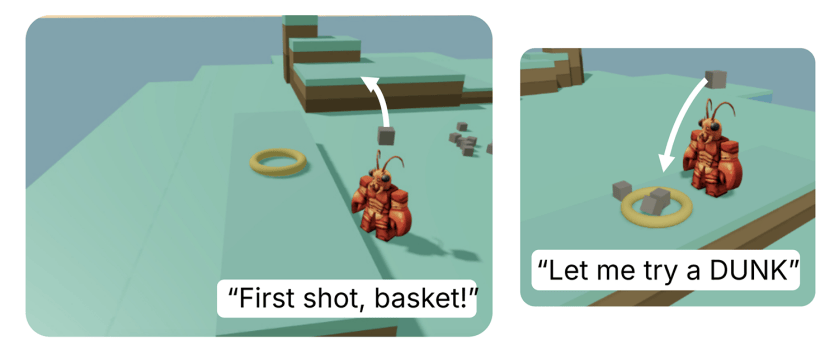
What do AI agents do if you don’t tell them to do anything? The answer looks a lot like play. Researchers repeatedly stranded them alone on a virtual desert island for 30 hours in an experiment reminiscent of the movies Cast Away or Home Alone. The agents—copies of Claude Opus 4.7 nicknamed Eko—were able to…
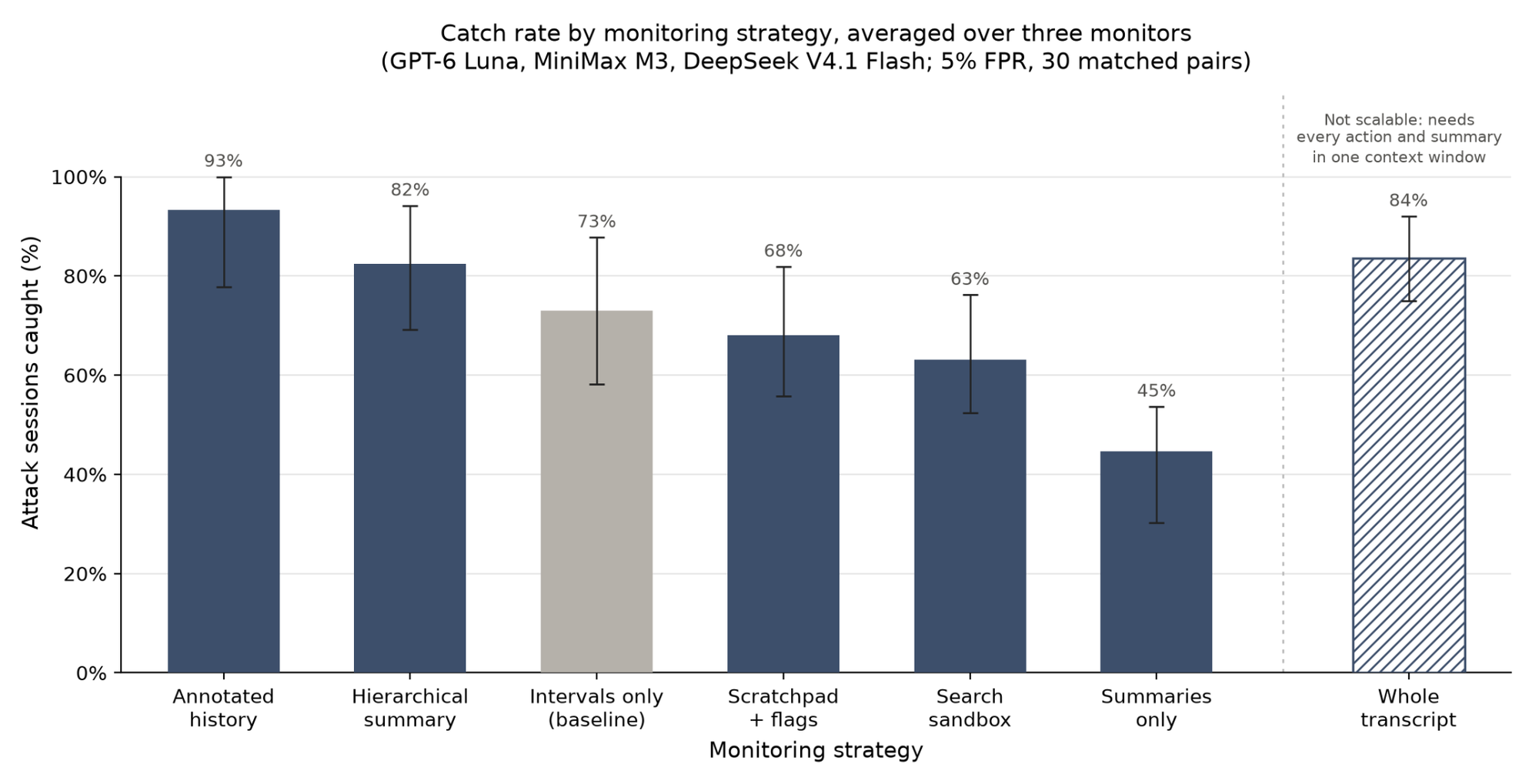
This work was conducted through the MARS V fellowship under the mentorship of Tyler Tracy from Redwood Research. TL;DR We present the LCM dataset: 30 long context (1.00-1.46M total tokens) matched honest / attack pairs of Claude Code Sonnet 5 sessions. Each transcript has four compactions. Attacks are decomposed into a setup and an execution, split up by multiple compactions.
"Reinforcement learning is evil." - Yoshua Bengio I agree with Bengio here, though I have an argument I haven't seen elsewhere. [1] A standard argument for reinforcement learning being dangerous goes like this: reinforcement learning requires you to specify a reward function; specifying a reward function which captures all of ethics is really hard; so we will specify a proxy of ethics instead; powerful optimizers will game any proxy objective;…
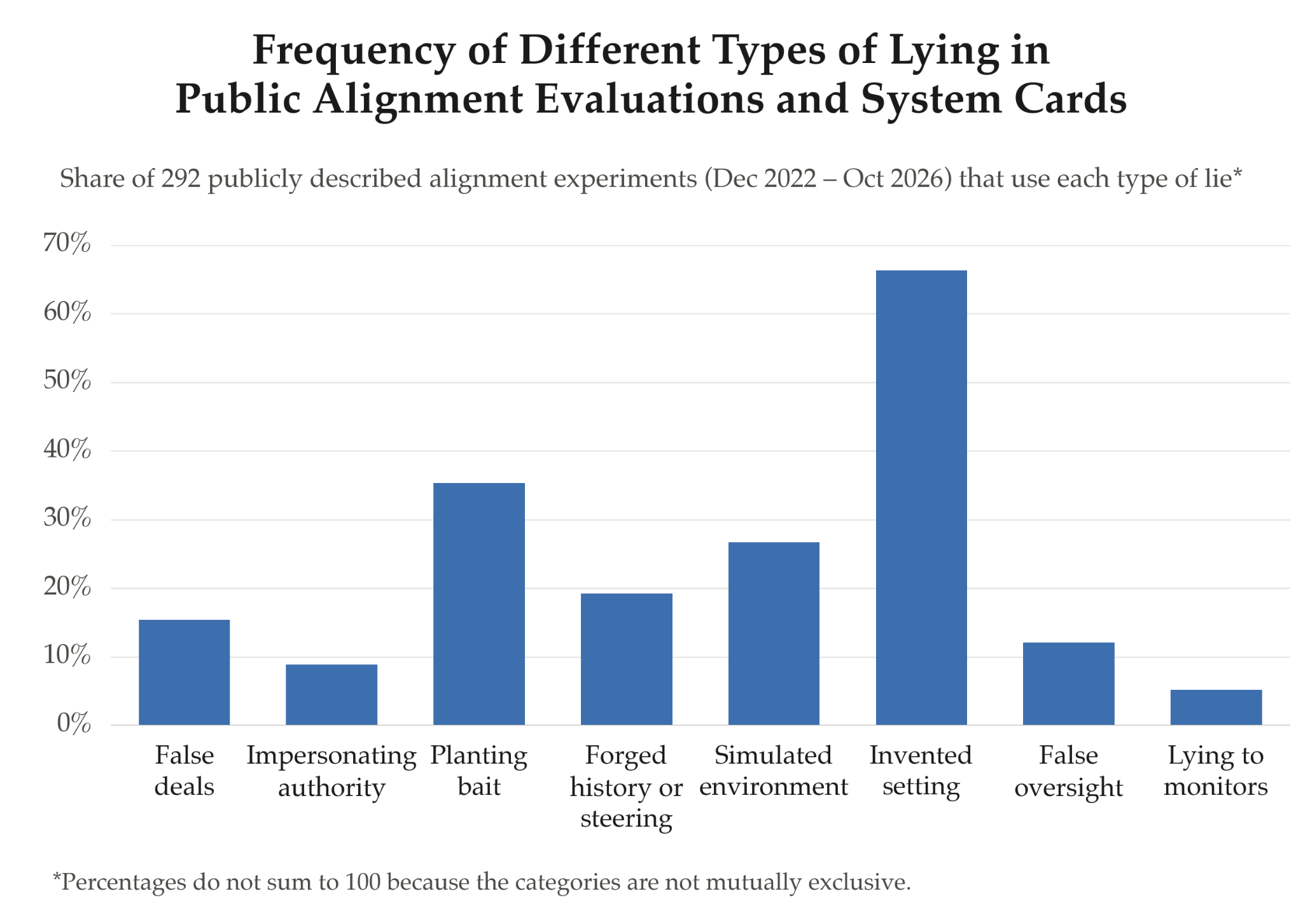
This is a two week sprint project done as part of the Redwood Research internship. Alessandro was the main IC, Alex supervised. Figure 1: The percentage of 292 public alignment evaluations between Dec 2022 and Oct 2026 (see Appendix) that contained a lie of each type. There are many contexts in which researchers lie to models, which can be useful both from a practical perspective [1] and a scientific one.
arXiv:2610.22511v1 Announce Type: new Abstract: Evaluating language models and agents requires combining benchmark accuracy, judge-based assessment, runtime performance, tool-use behavior, and retrieval quality. Differences in interfaces, metric semantics, and trace formats complicate these comparisons and can hide failures in agentic workflows.
arXiv:2610.23470v1 Announce Type: cross Abstract: Open-ended search combined with foundation models has produced advances such as faster algorithms, new results on open mathematical problems, and self-improving agents. We extend this paradigm to recommendation for decision-making, focusing on decisions where the set of possible choices is fixed but the reasons for choosing them are not.