Ralph Page was a very influential dance caller who published Northern Junket , a square dance magazine. This was "square dance" in the broad sense, before the club and trad communities divided, and while he came from a strong live music tradition he was living through the transition to recorded music. I looked through the Northern Junket archives to see his perspective on live music , and I came across a few passages that show the wave of the contra dance revival sweeping across New England in the early 1970s. In Vol 9 No 8 (1969), Page is writing about live music as something so rare that most haven't danced to it. An evening dance in Cambridge with live music is an exciting exception: How long has it been since you danced to good live music? I'll imagine that seventy-five percent of the club dancers in this country have never had that pleasure. What a pity! It might be a way of keeping your group interested in dancing. Certainly nothing would be lost if every square dance club started an orchestra to play for their parties. At first perhaps they could play but for one set of dances. So what? It would be a start. And as their repertoire increased I am sure that interest in that particular club would increase in like manner. I had the privilege of calling for a special recently at the Cambridge, Mass. YWCA, sponsored by the Taylors. Live music was the feature of the evening. Elise Nichols and Walter Lob played their fiddles and were more than ably 'seconded' by Marianne Taylor at the piano. What wonderful music they played! As the dance drew to a close they were given a thunderous ovation from the big crowd. They deserved it. The party was worth attending just to listen to such tunes as Massai's Favorite, Cincinnati Hornpipe, Pig Town Fling and Haste To the Wedding. Time is getting short because good fiddlers are getting to be as scarce as hen's teeth. There is little incentive for violinists to learn the old tunes. It would be interesting to learn of any clubs that are trying to keep live music from becoming a lost art as far as square dancing is concerned. Here he's commenting on it being rare, but not getting into the why. A couple issues later in Vol 9 No 10 (1969) he blames economics : Soon the entire country was flooded with square dance recordings, and the necessity of using records was brought on by the high price that musicians ask to play for a dance. Three years later, in Vol 11 No 1 (1972), it's a very different story: One of the most heartening things about the just ended dancing season is the increased use of live music. Many of the musicians are college students or in some cases, teenagers. And these young people are GOOD! Sannella, of Lexington, Mass. tells me that he has had far more requests for dances with an orchestra than ever before. Perhaps the heyday of canned music for dancing is over and done with. The C.D.S. Drop In evenings have I believe, always insisted on live music at their Thursday night parties, Dick Davis uses live music almost entirely. Dick Leger (for my money the best caller in the country) frequently calls to an orchestra. Let's not get too ecstatic or go overboard with the idea but at least the road back has begun it seems. Many of the young people getting interested in square and folk dance music, are trained musicians. That bodes well for the future. The old-time orchestra was good enough to play an hour-long concert of "heavy" music, before the dancing began. Some of these young folks could do that now, and the rest of them, will be able to within a very few years. God speed the day! Perhaps some of the square dance clubs that are just barely hanging on could make a come-back if they could: find 3-4 of the members who would be willing to play for an evening's dancing once in a while. Who knows? Stranger things have happened! And then a few months later in Vol 11 No 4 (1973) he writes: There is a young man here in middle New England who is leading many weekly public dances. His average attendance is between 200 and 300 young college-aged and younger dancers. His program is at least 75 percent contra dances with some English country dances quite often, and always a few of the round dances that have been danced here for a couple of dance generations, such as Gay Gordons, The Roberts, Road to the Isles etc. His success is not something that has happened overnight; it has been growing for at least five years. He MUST be doing something right! While this doesn't mention live music, this is pretty clearly Dudley Laufman who would have been playing fiddle or accordion while calling. I would like to go back through more sources and pull more of this history together, but it's interesting to see how sudden the reversal was. Or maybe he's talking about two different scenes here, with club squares pulling apart from traditional contras and squares, and this is not as sudden as it looks? Comment via: facebook , mastodon , bluesky Discuss
Ralph Page was a very influential dance caller who published Northern Junket , a square dance magazine. This was "square dance" in the broad sense, before the club and trad communities divided, and while he came from a strong live music tradition he was living through the transition to recorded music.
I looked through the Northern Junket archives to see his perspective on live music , and I came across a few passages that show the wave of the contra dance revival sweeping across New England in the early 1970s.
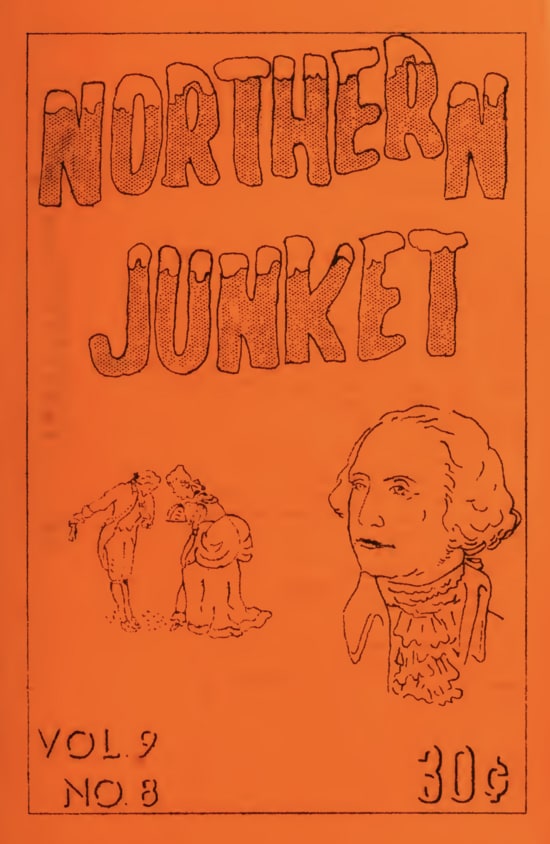
In Vol 9 No 8 (1969), Page is writing about live music as something so rare that most haven't danced to it. An evening dance in Cambridge with live music is an exciting exception:
I had the privilege of calling for a special recently at the Cambridge, Mass. YWCA, sponsored by the Taylors. Live music was the feature of the evening. Elise Nichols and Walter Lob played their fiddles and were more than ably 'seconded' by Marianne Taylor at the piano. What wonderful music they played! As the dance drew to a close they were given a thunderous ovation from the big crowd. They deserved it. The party was worth attending just to listen to such tunes as Massai's Favorite, Cincinnati Hornpipe, Pig Town Fling and Haste To the Wedding.
Time is getting short because good fiddlers are getting to be as scarce as hen's teeth. There is little incentive for violinists to learn the old tunes. It would be interesting to learn of any clubs that are trying to keep live music from becoming a lost art as far as square dancing is concerned.
Here he's commenting on it being rare, but not getting into the why. A couple issues later in Vol 9 No 10 (1969) he blames economics :
Three years later, in Vol 11 No 1 (1972), it's a very different story:
The C.D.S. Drop In evenings have I believe, always insisted on live music at their Thursday night parties, Dick Davis uses live music almost entirely. Dick Leger (for my money the best caller in the country) frequently calls to an orchestra. Let's not get too ecstatic or go overboard with the idea but at least the road back has begun it seems.
Many of the young people getting interested in square and folk dance music, are trained musicians. That bodes well for the future. The old-time orchestra was good enough to play an hour-long concert of "heavy" music, before the dancing began. Some of these young folks could do that now, and the rest of them, will be able to within a very few years. God speed the day!
Perhaps some of the square dance clubs that are just barely hanging on could make a come-back if they could: find 3-4 of the members who would be willing to play for an evening's dancing once in a while. Who knows? Stranger things have happened!
And then a few months later in Vol 11 No 4 (1973) he writes:
While this doesn't mention live music, this is pretty clearly Dudley Laufman who would have been playing fiddle or accordion while calling.
I would like to go back through more sources and pull more of this history together, but it's interesting to see how sudden the reversal was. Or maybe he's talking about two different scenes here, with club squares pulling apart from traditional contras and squares, and this is not as sudden as it looks?

正在加载评论…