内容导读Summary Following an intense viral infection in 2019, I became ill with a mysterious chronic illness, which became progressively worse until mid-2024 when I became partially bedbound with dozens of debilitating symptoms that normal humans only experience in the months/weeks/days leading up to death. Over my years of being ill, I saw over 30 doctors/therapists/health coaches and tried well over 100 different treatments and palliatives. Most of these did nothing or made things worse, or at best provided slight relief. I try to give a sense of what it is like to live with such an illness. In mid-2024 I began a treatment called brain retraining (also known by other names, such as the mindbody approach and mindbody work ; I will use any of these terms throughout the blog post interchangeably), which cannot be explained in such a small space as this summary but which you can think of as a combination of meditation and exposure therapy, and which is widely considered to be a scam in the "complex chronic illness space" (a vague and spread-out space of people who suffer from illnesses such as ME/CFS, MCAS, mold illness, post-viral illness, long COVID, chronic Lyme disease, dysautonomia, POTS, Ehlers–Danlos syndrome, and so on, none of which have any widely-agreed-upon cure, and some of which have no widely-agreed-upon diagnosis). Brain retraining has over the course of the last 2 years slowly given me my life back. I am still not at full health, but it seems probable to me now that if I keep doing the things I am doing, I will eventually reach full health. I give a description of brain retraining/the mindbody approach in non-mysterious terms, as well as my own experience with it. I also address the question of whether brain retraining is just meditation or therapy. I then analyze the social and epistemic dynamics of the mindbody space. My basic conclusion is that even though there is life-changing information being disseminated in this space, the economic incentives are such that the easiest way to profit is by focusing marketing on desperately ill people with poor epistemics. This leads to a phenomenon that I have called legitimate scams , where brain retraining programs operate in much the same ways as scams despite being, in some sense, completely legitimate. In so focusing on desperate people with poor epistemics, the mindbody approach has awful marketing for people who care about epistemics (e.g. science-minded folk and readers of LessWrong), so that paradoxically, the more truth-oriented one is, the harder it is to reach the truth; as a case study, I go through all of the "near misses" I have had spanning almost a decade where I almost tried the mindbody approach upon finding out about it for the mjx-container[jax="CHTML"] { line-height: 0; } mjx-container [space="1"] { margin-left: .111em; } mjx-container [space="2"] { margin-left: .167em; } mjx-container [space="3"] { margin-left: .222em; } mjx-container [space="4"] { margin-left: .278em; } mjx-container [space="5"] { margin-left: .333em; } mjx-container [rspace="1"] { margin-right: .111em; } mjx-container [rspace="2"] { margin-right: .167em; } mjx-container [rspace="3"] { margin-right: .222em; } mjx-container [rspace="4"] { margin-right: .278em; } mjx-container [rspace="5"] { margin-right: .333em; } mjx-container [size="s"] { font-size: 70.7%; } mjx-container [size="ss"] { font-size: 50%; } mjx-container [size="Tn"] { font-size: 60%; } mjx-container [size="sm"] { font-size: 85%; } mjx-container [size="lg"] { font-size: 120%; } mjx-container [size="Lg"] { font-size: 144%; } mjx-container [size="LG"] { font-size: 173%; } mjx-container [size="hg"] { font-size: 207%; } mjx-container [size="HG"] { font-size: 249%; } mjx-container [width="full"] { width: 100%; } mjx-box { display: inline-block; } mjx-block { display: block; } mjx-itable { display: inline-table; } mjx-row { display: table-row; } mjx-row > * { display: table-cell; } mjx-mtext { display: inline-block; } mjx-mstyle { display: inline-block; } mjx-merror { display: inline-block; color: red; background-color: yellow; } mjx-mphantom { visibility: hidden; } _::-webkit-full-page-media, _:future, :root mjx-container { will-change: opacity; } mjx-math { display: inline-block; text-align: left; line-height: 0; text-indent: 0; font-style: normal; font-weight: normal; font-size: 100%; font-size-adjust: none; letter-spacing: normal; border-collapse: collapse; word-wrap: normal; word-spacing: normal; white-space: nowrap; direction: ltr; padding: 1px 0; } mjx-container[jax="CHTML"][display="true"] { display: block; text-align: center; margin: 1em 0; } mjx-container[jax="CHTML"][display="true"][width="full"] { display: flex; } mjx-container[jax="CHTML"][display="true"] mjx-math { padding: 0; } mjx-container[jax="CHTML"][justify="left"] { text-align: left; } mjx-container[jax="CHTML"][justify="right"] { text-align: right; } mjx-mi { display: inline-block; text-align: left; } mjx-c { display: inline-block; } mjx-utext { display: inline-block; padding: .75em 0 .2em 0; } mjx-mo { display: inline-block; text-align: left; } mjx-stretchy-h { display: inline-table; width: 100%; } mjx-stretchy-h > * { display: table-cell; width: 0; } mjx-stretchy-h > * > mjx-c { display: inline-block; transform: scalex(1.0000001); } mjx-stretchy-h > * > mjx-c::before { display: inline-block; width: initial; } mjx-stretchy-h > mjx-ext { /* IE */ overflow: hidden; /* others */ overflow: clip visible; width: 100%; } mjx-stretchy-h > mjx-ext > mjx-c::before { transform: scalex(500); } mjx-stretchy-h > mjx-ext > mjx-c { width: 0; } mjx-stretchy-h > mjx-beg > mjx-c { margin-right: -.1em; } mjx-stretchy-h > mjx-end > mjx-c { margin-left: -.1em; } mjx-stretchy-v { display: inline-block; } mjx-stretchy-v > * { display: block; } mjx-stretchy-v > mjx-beg { height: 0; } mjx-stretchy-v > mjx-end > mjx-c { display: block; } mjx-stretchy-v > * > mjx-c { transform: scaley(1.0000001); transform-origin: left center; overflow: hidden; } mjx-stretchy-v > mjx-ext { display: block; height: 100%; box-sizing: border-box; border: 0px solid transparent; /* IE */ overflow: hidden; /* others */ overflow: visible clip; } mjx-stretchy-v > mjx-ext > mjx-c::before { width: initial; box-sizing: border-box; } mjx-stretchy-v > mjx-ext > mjx-c { transform: scaleY(500) translateY(.075em); overflow: visible; } mjx-mark { display: inline-block; height: 0px; } mjx-mn { display: inline-block; text-align: left; } mjx-c::before { display: block; width: 0; } .MJX-TEX { font-family: MJXZERO, MJXTEX; } .TEX-B { font-family: MJXZERO, MJXTEX-B; } .TEX-I { font-family: MJXZERO, MJXTEX-I; } .TEX-MI { font-family: MJXZERO, MJXTEX-MI; } .TEX-BI { font-family: MJXZERO, MJXTEX-BI; } .TEX-S1 { font-family: MJXZERO, MJXTEX-S1; } .TEX-S2 { font-family: MJXZERO, MJXTEX-S2; } .TEX-S3 { font-family: MJXZERO, MJXTEX-S3; } .TEX-S4 { font-family: MJXZERO, MJXTEX-S4; } .TEX-A { font-family: MJXZERO, MJXTEX-A; } .TEX-C { font-family: MJXZERO, MJXTEX-C; } .TEX-CB { font-family: MJXZERO, MJXTEX-CB; } .TEX-FR { font-family: MJXZERO, MJXTEX-FR; } .TEX-FRB { font-family: MJXZERO, MJXTEX-FRB; } .TEX-SS { font-family: MJXZERO, MJXTEX-SS; } .TEX-SSB { font-family: MJXZERO, MJXTEX-SSB; } .TEX-SSI { font-family: MJXZERO, MJXTEX-SSI; } .TEX-SC { font-family: MJXZERO, MJXTEX-SC; } .TEX-T { font-family: MJXZERO, MJXTEX-T; } .TEX-V { font-family: MJXZERO, MJXTEX-V; } .TEX-VB { font-family: MJXZERO, MJXTEX-VB; } mjx-stretchy-v mjx-c, mjx-stretchy-h mjx-c { font-family: MJXZERO, MJXTEX-S1, MJXTEX-S4, MJXTEX, MJXTEX-A ! important; } @font-face /* 0 */ { font-family: MJXZERO; src: url("https://cdn.jsdelivr.net/npm/mathjax@3/es5/output/chtml/fonts/woff-v2/MathJax_Zero.woff") format("woff"); } @font-face /* 1 */ { font-family: MJXTEX; src: url("https://cdn.jsdelivr.net/npm/mathjax@3/es5/output/chtml/fonts/woff-v2/MathJax_Main-Regular.woff") format("woff"); } @font-face /* 2 */ { font-family: MJXTEX-B; src: url("https://cdn.jsdelivr.net/npm/mathjax@3/es5/output/chtml/fonts/woff-v2/MathJax_Main-Bold.woff") format("woff"); } @font-face /* 3 */ { font-family: MJXTEX-I; src: url("https://cdn.jsdelivr.net/npm/mathjax@3/es5/output/chtml/fonts/woff-v2/MathJax_Math-Italic.woff") format("woff"); } @font-face /* 4 */ { font-family: MJXTEX-MI; src: url("https://cdn.jsdelivr.net/npm/mathjax@3/es5/output/chtml/fonts/woff-v2/MathJax_Main-Italic.woff") format("woff"); } @font-face /* 5 */ { font-family: MJXTEX-BI; src: url("https://cdn.jsdelivr.net/npm/mathjax@3/es5/output/chtml/fonts/woff-v2/MathJax_Math-BoldItalic.woff") format("woff"); } @font-face /* 6 */ { font-family: MJXTEX-S1; src: url("https://cdn.jsdelivr.net/npm/mathjax@3/es5/output/chtml/fonts/woff-v2/MathJax_Size1-Regular.woff") format("woff"); } @font-face /* 7 */ { font-family: MJXTEX-S2; src: url("https://cdn.jsdelivr.net/npm/mathjax@3/es5/output/chtml/fonts/woff-v2/MathJax_Size2-Regular.woff") format("woff"); } @font-face /* 8 */ { font-family: MJXTEX-S3; src: url("https://cdn.jsdelivr.net/npm/mathjax@3/es5/output/chtml/fonts/woff-v2/MathJax_Size3-Regular.woff") format("woff"); } @font-face /* 9 */ { font-family: MJXTEX-S4; src: url("https://cdn.jsdelivr.net/npm/mathjax@3/es5/output/chtml/fonts/woff-v2/MathJax_Size4-Regular.woff") format("woff"); } @font-face /* 10 */ { font-family: MJXTEX-A; src: url("https://cdn.jsdelivr.net/npm/mathjax@3/es5/output/chtml/fonts/woff-v2/MathJax_AMS-Regular.woff") format("woff"); } @font-face /* 11 */ { font-family: MJXTEX-C; src: url("https://cdn.jsdelivr.net/npm/mathjax@3/es5/output/chtml/fonts/woff-v2/MathJax_Calligraphic-Regular.woff") format("woff"); } @font-face /* 12 */ { font-family: MJXTEX-CB; src: url("https://cdn.jsdelivr.net/npm/mathjax@3/es5/output/chtml/fonts/woff-v2/MathJax_Calligraphic-Bold.woff") format("woff"); } @font-face /* 13 */ { font-family: MJXTEX-FR; src: url("https://cdn.jsdelivr.net/npm/mathjax@3/es5/output/chtml/fonts/woff-v2/MathJax_Fraktur-Regular.woff") format("woff"); } @font-face /* 14 */ { font-family: MJXTEX-FRB; src: url("https://cdn.jsdelivr.net/npm/mathjax@3/es5/output/chtml/fonts/woff-v2/MathJax_Fraktur-Bold.woff") format("woff"); } @font-face /* 15 */ { font-family: MJXTEX-SS; src: url("https://cdn.jsdelivr.net/npm/mathjax@3/es5/output/chtml/fonts/woff-v2/MathJax_SansSerif-Regular.woff") format("woff"); } @font-face /* 16 */ { font-family: MJXTEX-SSB; src: url("https://cdn.jsdelivr.net/npm/mathjax@3/es5/output/chtml/fonts/woff-v2/MathJax_SansSerif-Bold.woff") format("woff"); } @font-face /* 17 */ { font-family: MJXTEX-SSI; src: url("https://cdn.jsdelivr.net/npm/mathjax@3/es5/output/chtml/fonts/woff-v2/MathJax_SansSerif-Italic.woff") format("woff"); } @font-face /* 18 */ { font-family: MJXTEX-SC; src: url("https://cdn.jsdelivr.net/npm/mathjax@3/es5/output/chtml/fonts/woff-v2/MathJax_Script-Regular.woff") format("woff"); } @font-face /* 19 */ { font-family: MJXTEX-T; src: url("https://cdn.jsdelivr.net/npm/mathjax@3/es5/output/chtml/fonts/woff-v2/MathJax_Typewriter-Regular.woff") format("woff"); } @font-face /* 20 */ { font-family: MJXTEX-V; src: url("https://cdn.jsdelivr.net/npm/mathjax@3/es5/output/chtml/fonts/woff-v2/MathJax_Vector-Regular.woff") format("woff"); } @font-face /* 21 */ { font-family: MJXTEX-VB; src: url("https://cdn.jsdelivr.net/npm/mathjax@3/es5/output/chtml/fonts/woff-v2/MathJax_Vector-Bold.woff") format("woff"); } mjx-c.mjx-c1D45B.TEX-I::before { padding: 0.442em 0.6em 0.011em 0; content: "n"; } mjx-c.mjx-c2212::before { padding: 0.583em 0.778em 0.082em 0; content: "\2212"; } mjx-c.mjx-c31::before { padding: 0.666em 0.5em 0 0; content: "1"; } th time (including from a 2016 Scott Alexander blog post) and yet didn't. Given how bizarre my own experience has been with this illness and with brain retraining, I honestly have no idea how to generalize to other people suffering from similar conditions. I have quite a wide range of possibilities in mind, anywhere from "This is a weird miracle cure that works on a few weird people like me, but will do nothing for most people suffering from similar conditions" to "Maybe the Christian Science people were onto something". It is super lame to hedge and say "more research is needed", but after thinking about this for two years, I honestly really have no idea what to think. I explain the various considerations that I see. I also discuss the idea of luck-based medicine and medical miracles in relation to brain retraining. I explain what I mean by the phrase "being stuck in one's head" and how I was stuck in my head for almost two decades, and then try to explain my current understanding of why I became so ill. In short, many stressful life experiences over the years contributed to a deep sense that the world is unsafe (and being stuck in my head was a large part of how I carried out this sense of lack of safety), and the viral infection in 2019 was the final (quite large) straw that broke the camel's back (and further stressors even after 2019 worsened my symptoms). Introduction It's been almost two and a half years since I wrote my previous post on LessWrong . A lot has happened since then regarding the state of my illness and my beliefs about the world. I've been meaning to write this post for quite some time, but due to various reasons that I will get into later in this post, [1] I haven't managed to write it until now. In the spirit of " it's about the process, not the conclusion ", I try in this post not so much to give polished convincing arguments to try to "prove" conclusions that I believe. Instead, I will describe what beliefs I started with, what happened to me over the last seven years (and especially the past two years), and then try to show you my process of making sense of all of what happened to me and what beliefs I ended up with. There is a trickiness here in that "what happened to me" isn't objective evidence that I can pull up for you in the form of a mathematical proof or a statistically rigorous replicated study. How you handle what happened to a random person on the internet is ultimately up to you, but I hope to demonstrate at the very least that I am of sound mind and that what happened to me is worth taking seriously. There is also somewhat of a reference class problem when interpreting my anecdote. As I explained in the summary section above, and will explain in more detail over the course of the post, I've slowly improved my health over the past two years and I attribute this improvement to brain retraining. If one uses a reference class of general chronic health conditions, the obvious objection is that perhaps I just improved with time, regressing back to a healthier mean. I think this conclusion would be mistaken. It seems important in interpreting my anecdote to be familiar with the "complex chronic illness space" (which includes illnesses such as ME/CFS, MCAS, mold illness, post-viral illness, long COVID, chronic Lyme disease, dysautonomia, POTS, Ehlers–Danlos syndrome), where, generally speaking, the longer one has been ill, the more hopeless one's situation is. When I used to browse the long COVID community r/covidlonghaulers , it was generally considered that 2 years is the cutoff of when "got better with time" (i.e. regressing back to health) is still possible; after one has been ill for 2 years with no improvement (or worse, gradual decline as in my case), people start saying they will be stuck with it for life unless they find something that works. One can easily find cases like Whitney Dafoe (ill since 2004) and Physics Girl (Dianna Cowern) (ill since 2022) and Toni Bernhard (ill since 2001) to see how stable these conditions can be. In what follows, I am expecting readers to at least somewhat be familiar with these conditions, so as to be able to situate my anecdote within this reference class. One thing that has consistently annoyed me about other people who talk about "woo" topics is that they tend to get "sucked in" to the framing/jargon/metaphysics of that woo topic, such that from the outside they sound insane. And they do so without trying to bridge the gap with a general audience at all , despite communicating with people "on the outside". In such cases, my reaction has been "What you are telling me sounds insane, and you also seem insane, so I have no choice but to just ignore you and avoid doing whatever you did so I don't become insane like you." I am explicitly trying to avoid this mistake, i.e. I am explicitly trying to bridge the gap – to be concrete, between the me-of-2023 and the me-of-2026. There are many nearby misunderstandings of what I am about to say, such that if I say one thing, like "the mindbody method essentially consists of showing your brain that you are safe", people will hear any one of about ten things, none of which are correct. Communicating this stuff is hard. That is (partly) why this post is so long, and also (partly) why it has taken such a long time to write and why it has felt so difficult to write. [2] A quick summary of my illness from 2019 to May 2024 To give some more context for people who may not know anything about me, I have been experiencing many strange physical and mental symptoms since 2019. As best as I could make out at the time of writing my post in 2024 , the trigger for these symptoms was a flu-like viral illness I contracted in April 2019 while traveling in the UK (I am from the US). The flu-like illness lasted around two weeks, with typical symptoms like sore throat, cough, fever, and mucus drainage. It was a particularly intense viral illness, on a level that I don't think I had experienced since childhood. At the time, I didn't think much of the illness. But after the initial illness ended, I started to get strange new symptoms. These included panic attacks, shortness of breath, brain fog, difficulty swallowing, early satiety, nausea, heart palpitations, difficulty regulating body temperature (mostly heat intolerance), tremors, dizziness/vertigo, weakness, caffeine and alcohol intolerance, orthostatic intolerance and POTS, hunger attacks, tinnitus, afterimages and visual snow, fatigue/heaviness/frailness, the development of food intolerances, salt intolerance, peeling lips (exfoliative cheilitis), and more. (I will go into more detail on the symptoms later in this post .) Initially I would spend most of my time feeling pretty normal, and the symptoms would occasionally appear as "attacks" that I would have to deal with. But starting around mid-2020, this dynamic inverted, where the symptoms would be pretty much constant, with tiny pockets of relief such as during sleep. [3] These symptoms would also confusingly "rotate" so at any given moment in time I may be dealing with three or four symptoms, while the others would be "dormant". For various reasons, mainly my belief that my symptoms were a result of anxiety, I did not seriously pursue medical treatment until 2022. Starting in 2022, I made it my full priority to work on my health as a physical health issue rather than an anxiety disorder. I worked with a speech pathologist for my swallowing difficulty, which did nothing, and then starting in late 2022 I started working with a naturopath. The naturopath did a bunch of tests on me, one of which was a stool test, which showed I had gut dysbiosis (I got a 10/10 for gut dysbiosis on the Genova Diagnostics GI Effects stool test). I also did a SIBO breath test, which showed I also had SIBO. Based on these test results, and the fact that I could not swallow any pills on account of my swallowing difficulty, my naturopath prescribed me several liquid antimicrobial herbal remedies to wipe out the bacterial and fungal pathogens in my gut. These herbal remedies made some of my symptoms better, made other ones worse, and overall I felt like I was in much the same place, and possibly worse off than before I started. List of doctors and treatments I tried After the gut protocol failed, I continued seeing many more doctors and trying even more treatments. In total, I think I have seen 3 primary care doctors, 8 naturopaths, 2 physical therapists, 1 allergist, 2 ear-nose-throat (ENT) specialists, 2 speech pathologists, 1 sleep specialist, 2 pulmonologists, 4 nutritionists/dieticians, 1 gastroenterologist, 1 endocrinologist, 2 proctologists, 2 psychiatrists, 3 therapists, 1 breathing coach, 4 general health coach type people (I counted some people under multiple categories, but it's over 30 distinct people in total). Some of the treatments and palliatives I tried were (feel free to ask me about any of these): For sleep: fixing my circadian rhythm (f.lux, amber bulb at night, dark mode on all devices at night, computer off 1 hour before sleep, getting sunlight in the morning), earplugs, various sleep masks, blackout curtains, a memory foam mattress, memory foam pillows, melatonin. For physical pain/posture: massage gun, shiatsu massager, buying an external computer monitor for posture, CBD topical body lotion, yoga. For shortness of breath: Buteyko breathing, menthol inhaler, resonance/coherent breathing, capnometry biofeedback using a CapnoTrainer , the Liberating the Natural Breath course (Alexander Technique applied to breathing, with techniques like Constructive Rest), various biofeedback devices (HeartMath HRV device, Polar strap, Fitbit), Flonase, azelastine nasal spray, a HEPA filter in my room, two herbal teas for breathing (one of which had custom-chosen herbs and was prescribed to me), adhesive nasal strips, NAC, albuterol inhaler, albuterol nebulizer, levalbuterol nebulizer, Alvesco, humidifier, walking for 40 minutes every day for a week to restore carbon dioxide/bicarbonate levels. For temperature dysregulation: various heat management interventions (air conditioner, ice packs, water spray bottle). For allergy-like symptoms: cromolyn, various allergy medications (Allegra, Xyzal, Claritin, hydroxyzine HCl), allergy shots (SCIT), dust mite allergy cover for my pillow and mattress, quercetin powder. For swallowing difficulty: various swallowing and tongue desensitization exercises. For hunger attacks/trying to get as many calories as possible: prenatal powder that contained betaine HCl, Physicians' Elemental Diet powder, glucose monitor, butterbur/feverfew, zinc gluconate liquid, blending meals, various protein and energy bars (ZONE bars, PROBAR, IQ bar, Power Crunch bar), various nutrition shakes (e.g. Kate Farms, Orgain), various cheeses, Athletic Greens, trail mix, Carnation instant breakfast, Holden Karnofsky-style Power Smoothies, baby food, ghee, amla powder. For gut issues: nystatin, digestive bitters, digestive enzymes, going dairy-free, going gluten-free, avoiding FODMAPs, avoiding probiotics, Citrucel, sticking to animal protein, going vegetarian, calcium carbonate tablets, candied ginger, ginger tea, MotilPro, Sunfiber (partially hydrolyzed guar gum). For dizziness/vertigo: the Epley maneuver. For fatigue/low energy: vitamin B complex, Methyl Factors, various forms of vitamin B12, Yogi Sweet Tangerine Positive Energy tea. For lips (exfoliative cheilitis): vaseline, lanolin, collagen peptides. For electrolyte/salt sensitivity: various electrolyte powders, drinking lemon water. For OI/POTS: compression socks. For pelvic floor/fissure: nifedipine topical cream, diltiazem topical cream, MiraLAX, TENS device. For visual snow/afterimages: prescription glasses. For generic/overall health: going added-sugar-free, doing a modified form of the Autoimmune Protocol diet, using 23andMe and Promethease to see if I had any genetic risk factors or whatever, vitamin D, vitamin D with K2, Low Dose Naltrexone, getting another viral illness (in order to "reset" my immune system somehow), avoiding caffeine, avoiding alcohol, travel, jogging, walking, exercise bike, weight training with dumbbells, living in different places (including in a different country for 4 months), Manuka honey lozenges, salmon oil. For anxiety: a TENS device for vagal nerve stimulation, diaphragmatic breathing, square breathing, 4-7-8 breathing, EFT tapping, chanting, progressive muscle relaxation, chamomile tea, tulsi tea, l-theanine powder, l-theanine gummies, lithium orotate, lemon balm, GABA powder, clonidine, Ativan, magnesium glycinate, passionflower extract, motherwort, seeing a physical therapist for my nervous system. For depression/mood/mental health: Lexapro, low dose Ritalin, bromantane, coherence therapy (self-study), IFS (self-study), reading various self-help books including The Complex PTSD Workbook and Existential Kink , rhodiola tincture, metta meditation, talk therapy, socializing in person, and finally, fully leaning into checking out of life by distracting myself from my symptoms (music, movies, video games, etc). As you can probably guess, none of these things really helped. Most things did nothing, even for the local thing they were trying to improve. Some things, like Buteyko breathing, capnometry biofeedback, MiraLAX, and various anti-anxiety supplements/medications, did help with the local symptom without producing too many undesirable side effects, so I kept doing those things, but they did not meaningfully change my overall condition. Overall, trying the combination of all of the things listed above made me worse off compared to the start of 2022. Occasionally in the rationalist and effective altruist blogosphere I encounter posts with titles like "Have You Tried Applying Agency to Your Personal Problems?", you know, like this one , [4] and these always feel so disconnected from my own experience. You don’t think, oh, I could probably : Check on my nutrition and sleep, in a serious way Look into supplements and medication Throw some resources at improving my rest and recovery Ask all of my friends about the best anxiety treatments they’ve ever heard of, or the best coaches/therapists they’ve ever worked with Research any emerging therapies designed for people like me No, I totally did think of all of those things and, in fact, tried them all, while having all of the symptoms I've described. Back to my May 2024 post The above sets the stage for my previous LessWrong post . On May 27, 2024, I published my previous LessWrong post. I was tired of my existence. I was upset at the universe for allowing someone to exist in such a state for so long. It's hard to overstate how bad life was at this stage. Life becomes very small. You do things, you get massive symptoms, and you start making rules like "don't go outside when the temperature is 24 degrees Celsius or higher", "always pack both normal food and a PROBAR and a Kate Farms shake when going outside, so that you can keep eating, because if you don't eat all the time you will have horrible hunger attacks", "eat only mandarins for breakfast because other foods unpredictably cause hunger attacks when eaten first thing in the morning", "exercise only by walking in circles in the backyard, because jogging worsens symptoms afterward and going to the park could result in not being able to return home safely". And the rules get more and more numerous and onerous over time. But also I was not willing to give up. As my health kept declining, it became clear to me that I would not be able to keep trying random supplements and practices for long, or to even continue to research such treatments myself. So I wrote my previous LessWrong post, partly to understand why more nerds were not interested in researching this insane illness, and partly to see if I could maybe get someone to help me research treatments when I could no longer do so myself. Needless to say, that plan didn't work either. I couldn't have known at the time, but this LessWrong post ended up being published right around the time of a dramatic change in my health and my worldviews. Nystatin withdrawal and crash (May and June 2024) As it so happened, on May 28, 2024, I had a virtual appointment with one of my naturopaths. At the time, she had put me on a course of nystatin, an anti-fungal medication, for a candida infection that appeared on my stool test (the same stool test from above; her reasoning was that the antimicrobial herbs I had used previously were not hardcore enough, and that the candida was probably still affecting me). I had been using nystatin for over two months, crushing the tablets and drinking it in water because I could not swallow the tablets. [5] So at this appointment, on May 28, 2024, the day after I published my previous blog post, my naturopath told me that since it seemed like nystatin wasn't doing anything, I could discontinue it. So I did. As soon as I stopped taking it, weird stuff started happening to me like a recurrence of hunger attacks (which hadn't been happening in a while), and diarrhea (which I usually never get). I asked my naturopath about this, but she seemed unconcerned and just said I should taper off nystatin, which I did. She also didn't have any other treatments to offer me, other than that perhaps I could try box breathing, which is something that of course I had already tried and that I had gotten used to hearing from doctors. Things seemed to be going okay for a while, but then at the end of June 2024 I took a 30 minute walk around my neighborhood, and around the 20–25 minute mark or so I started feeling very overwhelmed and exhausted. (I was able to walk for 40+ minutes before without issues.) I came home and rested in bed, but the next day I still felt quite off, so I rested in bed for about half of the day. But I kept doing worse and worse, got diarrhea again, my POTS returned, and then summer started for real in the Seattle area where I live (I am very heat sensitive due to this illness). That is when things got very bad. Visiting the hell realms (what summer 2024 was like) The summer of 2024 was by far the hardest period of my life. It is a cliche to say that words cannot describe what it was like, but words really cannot describe it. I will attempt to describe it nonetheless. Essentially, I was barely alive. I was partially bedridden, and when I wasn't in bed I was just sitting in a chair at my desk, most of the time doing absolutely nothing. I slept 10–11 hours but couldn't sleep well (would keep waking up around 2–4am). I couldn't walk to the kitchen even to microwave food for myself, so I had to have caretakers (mostly my father and a friend; my mother was taking care of her own mother in another country) serve food and bring it to me in my room. I was constantly terrified of being alone in my room, and particularly terrified of being left alone in the house, but also I could not tolerate having more than one other person in my room with me. When I say "could not tolerate", it's not that I was psychologically anxious about being alone or having too many people around me, it's that the physical absence or presence was too much for my nervous system to handle. So most of the summer I had a friend just sit next to me in my room, quietly doing things on his laptop while I sat in a chair doing nothing or took naps in my bed. I had very bad cognitive exhaustion/overwhelm even from reading one paragraph of text, sometimes even one sentence; it's hard to describe what this feels like, but my brain felt like it was getting destroyed from the inside. I felt anxious basically the entire time, and would have panic attacks or get upset from the slightest thing (like my father going out to get a takeout burrito, or my friend throwing away the cucumbers in his salad, which some part of my brain decided was unethical and would not stop looping on). I could not tolerate the light on my ceiling, so I just used the amber bulb by my nightstand for the entire day, and had the curtains closed most of the time. I was extremely heat-sensitive, even more than I already was, and felt hot despite having an AC blasting in my room (my friend called my room the "ice cave", because it was both way too cold for him, and also very dark). I had what I called "microshakes", where the muscles between my ribs were visibly twitching. While seated, my face would get so uncomfortably hot (not to the touch, but "from the inside") that I would periodically have to lie down, which somehow helped to circulate the hot blood around my face to other parts of my body. (At least, that is my guess as to why lying down helped.) I could eat almost nothing other than white rice, meat or fish, steamed vegetables (but only carrots, kale, zucchini), sweet potatoes with unsalted Kerrygold butter, mandarin oranges, and Kate Farms shakes. All food was prepared completely unseasoned, and I would sprinkle tiny amounts of iodized salt on my food. One time, my father bought navel oranges because the store was out of mandarin oranges, but the navel oranges were so sweet that after eating about three slices I became so ill I had to lie down. Another time I remember eating cabbage and having intense pain in my gut along with tachycardia and being unable to sit up. I couldn't look at a screen for very much at a time, but sometimes I could close my eyes and listen to something on YouTube for 5 or 10 minutes at a time, and then I would need a break (where "break" means sitting in a chair, eyes closed, doing absolutely nothing, not even thinking any thoughts). Sometimes, even sitting and doing "nothing" was not enough. If a thought entered my head, like something about one of my doctors, some part of my mind took that as a cue to start drafting a mental message to that doctor, but that automatic thought process would cause a mental crash, so if I noticed my mind was trying to draft a mental message like that, I would have to exert a different sort of effort to stop computing that thought, so as to prevent a crash. In general, I became terrified of thinking thoughts for fear that they may cause a crash. I could not form complex thoughts or any thoughts about the future; I was oriented to simply surviving the next moment. In the beginning of the summer, I became so concerned that I was simply going to die that I began to draft a will but had no energy to actually work on it. My breathing problem got worse, to the point where I lost the ability to speak out loud because I was so winded; I would either type out messages in a chat application on my laptop or scribble messages on scraps of paper and pass them to people. When my breathing was bad, my nostrils would close up and my throat or diaphragm would start choking me. I could not tolerate music, even music that I previously really liked; it was simply too much stimulation. One of the only "enjoyable" things I could do, but again only 20 minutes or so at a time, with lots of rest in between each session, was to play Mega Man Battle Network 6 , a video game for children from 20 years ago. ( Pokemon Emerald was too much stimulation, because it required too many choices. Stardew Valley , a game that I found somewhat helpful in distracting from my symptoms and disengaging from life prior to summer 2024, became so stressful that I couldn't play it even for a few minutes.) Strangely, writing things down in a stream-of-consciousness way did not cause my mind to feel like it was crashing, so I was able to write more than I could read. I could of course not do anything I previously enjoyed, like mathematics or programming or thinking about the world. My mind would often just be looping with anxious thoughts, and I had to keep trying to break out of such loops by thinking about simpler, safer things; one time I started classifying the snowflake patterns on my bed sheet. In the evenings when the air was cooler I could sometimes sit outside in the backyard to get some fresh air, but I could not do this reliably. For the first time in my life, I began showering with a shower chair, and could only shower once every 2 weeks or so. I could not leave my house, nor was I even well enough to do virtual appointments with my doctors (who by this point had basically given up on me anyway). At this point I realized that I was too ill to receive medical care , as in, trying to get medical care would result in my hurting myself with symptoms, and the medical care wouldn't even help. At one point, I sent a desperate email to one of my naturopaths, who contacted my primary care doctor, who … a sequence of events led to a police officer knocking on my house door for a wellness check. [6] Strangely, even when seemingly so close to death, I would feel a profound sense of boredom. It felt unacceptable to be sitting and doing absolutely nothing. I constantly felt the urge to read or watch something, and would start doing something for a minute or so, only to feel completely overwhelmed by symptoms and needing to back off again. This was a constant struggle during this period. Eventually I wrote up a list of aphorisms to tell myself, called The Art of Doing Nothing ; it included things like "Every moment I do nothing is a moment that I win. The less I do (now), the better I (will) feel.", "When I feel well is when I must choose to do nothing." (because when I feel unwell, I have no choice), "Don’t make decisions; go by habit." (because decisions require too much thought and lead to mental crashes), "Even thoughts can be exhausting. I stop myself from computing the details of complicated thoughts.", and ended with "This Art seeks to make itself unnecessary: I follow these rules now so I won’t have to for long." I did have one meeting with a prospective doctor during the summer, to pursue a possibly quite legally sketchy treatment possibly costing tens of thousands of dollars. My symptoms were so intense that even Ativan didn't help to calm down the level of anxiety and malaise I felt. I also apparently collapsed on the floor once, and my friend had to scoop me off the ground onto my bed, but I don't have a very distinct memory of this. I could give more details about things I experienced, but I don't know if it would even help people understand. When I read other people with complex chronic illnesses describe their own symptoms, if I had that particular symptom I am like "yup, I know what that one is like" and if I didn't have that particular symptom I have little idea what it's like. Although I was never diagnosed with ME/CFS, I have found Whitney Dafoe's ME/CFS severity scale (see Figure 3) fascinating given my own experience with severe symptoms. On his scale, I was probably in the Very Severe category (I could use the bathroom on my own without much difficulty, I could shower every 2 weeks or so but only with great difficulty, I could scribble short notes or type short messages in chat, I mostly couldn't leave my bedroom but I could sit outside in the backyard sometimes for perhaps 10–20 minutes at a time, I couldn't do chores at all, I was only around half bedridden), although I had elements of Extremely Severe A (I could not really speak because I was so short of breath), Extremely Severe B (I could watch short videos but not longer ones, I could read a little but sometimes only one sentence, I could tolerate some human presence but e.g. only one person in the room at a time and they couldn't be causing too much stimulus), Extremely Severe C (I could not tolerate music or most types of content on the internet such as social media). In comparison, in 2019 I was Mild (pretty much able to live a normal life other than episodes happening once in a while, and I couldn't drink caffeine), in 2020–2022 I was Moderate (I could hold a part-time job but not a full-time one, could walk for 40+ minutes but couldn't jog, I could leave the house and even travel, etc.). During 2023 I progressed to Severe (I couldn't really work anymore, I was mostly housebound) and this continued to the first half of 2024. As I write this in 2026, I would say I am back to Moderate. But more about how I am currently doing in the final section, "Where I am now, and what is next?" One of the reasons I waited so long to write this post is that it is simply impossible to communicate what the summer of 2024 was like for me to someone who has not experienced this illness themselves. I could, for instance, say "I couldn't even read or think" but a normal, healthy person would not have the slightest idea what that actually means or what it felt like. And what is the point of writing a post and trying to communicate, if I can't get anyone to understand what the illness, particularly the worst months of it, was like? I don't know if I've succeeded, but the above was the best I could do for now. In fact, even I am forgetting the intensity of the symptoms. I know how I would describe the symptoms. I know which activities were easy vs possible with some difficulty vs possible with great difficulty vs impossible. But how did it feel , that is something I have trouble recalling experientially. Part of this difficulty may just be brain fog that I still have. As a more general point, I also want to mention that the excuses and narratives I had used to run my life until this point, such as "I am a smart and creative person" (one might call this the fundamental LessWrongian drive) and "I have worth because I provide value to others" (one might call this the fundamental effective altruist drive), stopped working entirely during this period. I was not smart or creative, and I knew it. I was completely helpless and provided no value to anyone, and I knew it and everyone around me knew it too. There is a terror to all this! And also a sense of "Wait, people still care about me? I still have some worth?" There is, apparently, a reason to keep living even here , and I got to practice living that life and figuring out what that all means. Similarly, I had spent my whole life chasing distractions and cravings. I could no longer eat anything tasty, listen to music or watch movies or play video games, or even go on a walk, and could not even consider more complicated pursuits like romance, career, or starting a family; as in, thoughts about these things did not even enter my mind. [7] When all these options are taken away, is there still value in being alive? I found that the answer, surprisingly, was yes. There is just something about being alive, some survival instinct. Keep going. I don't know how to explain it any better than that. Oh, and also, all the craving and bullshit narratives came back surprisingly quickly once I started doing better. There is a danger in forgetting what the illness was like, and I write in part to remember as much as I can of this experience. What about post-exertional malaise (PEM)? In the following section , I will talk about something called "brain retraining". People in the ME/CFS community sometimes say things like "brain retraining might work for someone who doesn't have PEM, but for people with true ME/CFS (i.e. someone who has PEM), brain retraining and gradually increasing activity is very dangerous ". More generally, people with ME/CFS talk about PEM as the "hallmark symptom" that distinguishes ME/CFS from all other mysterious chronic illnesses. So while I am on the topic of which symptoms I had, I'd like to address the question of whether I had PEM. Probably most readers of this post don't care about what PEM is or whether I had PEM as a symptom, so I recommend skipping this section unless you specifically came looking for a section that addressed this. First of all, to make sure we are all on the same page, what are the distinguishing features of PEM? The MEpedia page on PEM seems pretty good to me, and lists the following distinctive characteristics of PEM: After physical or mental exertion, there is a delayed onset of symptoms: The most common pattern for me was that symptoms would start increasing while I increased activity, or with a short delay (say, within an hour). However, there were definitely times when I would increase activity, be fine for the rest of that day, and then wake up the next day with worse symptoms. There has even been at least once instance where I increased activity, was basically fine that day and the next day, and then a few days after that I had a big increase in symptoms. I've also had many times when symptoms seemed to "randomly" increase for no apparent reason, where it is possible they were from some increased activity some unknown time ago. A prolonged recovery period from the increase in symptoms: For most of my illness, from 2019 to mid-2024, even if I had a very stressful day with lots of symptoms (e.g. from having to go to a doctor's appointment), I would pretty much be fully recovered by the next day. Something changed in mid-2024 though, where e.g. after the 30 minute walk in June 2024, I seemed to have a bona fide crash the way people with ME/CFS talk about, where it took me many months to get back to my previous baseline. I've had many other smaller symptom flares since then as well, e.g. when I first started working on this post, it was at a period when I was doing quite well (I was able to do some programming etc.), but then worked on the post for a few hours, started to feel cognitive malaise, went to sleep, and then for the next three months I was so brain fogged I couldn't really program, felt depressed, could do way less in general, etc. Type of symptoms (malaise, fatigue, pain, brain fog, sore throat, tender lymph nodes, flu-like feelings): malaise, fatigue (which for me was more like "frailty" or "weakness" or "heaviness"), and brain fog were common symptoms for me. I had occasional pain and sore throat. I don't think I ever had tender lymph nodes or full-blown flu-like feelings. Cognitive effort, physical activity, and emotions are all triggers, even sensory inputs like light or sounds can be triggers, and "exertion" can include basic activities of daily living: I've already given examples in the above bullets of both cognitive and physical activity as triggers. As for emotions, I don't think I have any distinct episode where that was the primary trigger, although small things people around me did would lead to big emotions in me and I could be looping on thoughts for hours (such as the burrito/cucumbers anecdote given previously; however, these emotions were rarely externalized in the form of crying, yelling, and so forth). Light and sounds could both trigger short episodes (e.g. turning on the lamp by my night stand in the morning would consistently make my heart start beating really fast, so I had to get my friend to gradually open the curtains over the course of about 20 minutes; two other people talking to each other in the same room as me could also be enough to make me have the cognitive malaise feeling, and I had a similar reaction to music for a long time, although I suspect both of these had more to do with the cognitive demands of interpreting the sounds rather than purely from the volume of sound), but these did not have a delayed onset, and also they lasted maybe up to a few hours. Showering was especially difficult for a long time and it could take me a few hours to recover sometimes, but similar to light and sound, I don't think it caused days-long flare-ups. Loss of functional capacity: I think my examples in the previous bullets demonstrate this. I read a tweet once (that I can no longer find) where someone suspected that people can start with some other named condition (like MCAS or dysautonomia) and then gradually "progress" to ME/CFS, and something like this seems consistent with my experience. My conclusion is: yes, I did have PEM, but it was not really a thing until 2024. Starting in 2024, it became a common thing, but for whatever reason, it's not a central concept for me, the main way in which I distinguish my experience and the framework from which I analyze my experience (to distinguish my pre-summer-2024 experience from my summer-2024 experience, I would emphasize more the loss of capacity to do basic things, and the intensity of symptoms). Does this mean I didn't have "real" PEM? Overall I feel kind of confused about this topic! Brain retraining I didn't know what was happening to me. One striking aspect of what was happening, however, was that I was rapidly becoming sensitive to things I had never been sensitive to (light, sound, presence of people in the same room as me, etc.), which told me that maybe the new symptoms had something to do with my nervous system. This vague idea, along with the fact that I was too sick to receive medical care (either in person or telehealth), made me more open to treatment approaches that try to calm down the nervous system. (Yes, I was still looking to try things. I was unwilling to just sit there and wait until I died.) Obviously, my illness was physical, but being a bit calmer couldn't hurt. So at the start of the summer, I also began something called the Gupta Program . The program teaches people a technique called "brain retraining", which somehow "rewires" people's brains so that they don't have their chronic illness anymore. The program claims that brain retraining works for ME/CFS, long COVID, Lyme disease, irritable bowel syndrome, mast cell activation syndrome, mold illness, fibromyalgia, dysautonomia, POTS, SIBO, drug withdrawal, electrical hypersensitivity, migraines, panic attacks, and so on and so forth. In other words, the program pretty much purports to cure any of the mysterious, not-well-understood chronic illnesses along with some common non-specific conditions. The Gupta Program is not the only such program; another well-known one is called DNRS. These programs are widely considered to be scams, not just by the Western medical world (which for the most part considers these chronic illnesses themselves to be fake, as many of these symptoms don't show up in standard testing [8] ), but also by chronically ill people themselves. For instance, r/cfs, the subreddit for ME/CFS, has a pinned FAQ post which contains the following text, which I believe is fairly representative of what people think of brain retraining programs: ALL of the “brain rewiring/retraining programs” are all harmful, ineffective, and are peddled by charlatans. Gupta, Lightning Process (sometimes referred to as Lightning Program), ANS brain retraining, Recovery Norway, the Chrysalis Effect, The Switch, and DNRS (dynamic neural retraining systems), Primal Trust, CFS School. They also have cultish parts to them. Do not do them. They’re purposely advertised to vulnerable sick people. At best it does nothing and you’ve lost money, at worst it can be really damaging to your health as these rely on you believing your symptoms are imagined. The gaslighting is traumatic for many people and the increased movement in some programs can cause people to deteriorate. The chronically ill people who review them (especially on youtube) in a positive light are often paid to talk about it and paid to recruit people to prey on vulnerable people without other options for income. Many are MLM/pyramid schemes. We do not allow discussion or endorsements of these on the subreddit. A couple of people had specifically mentioned the Gupta Program to me, and one had mentioned DNRS to me. So I had looked into these programs somewhat, and I knew all of this before I started the program. I even believed these programs are scams. In fact, a friend had access to the Gupta Program and in early 2024 I watched a few of the videos, but they seemed pretty ridiculous so I didn't attempt to actually do the program at the time. But now in summer 2024 I did the Gupta Program anyway. Why? I don't know that I have a good explanation. My doctors had given up on me at this point, and I was too sick to receive care. Every waking moment was unbearable. I had nothing else to do other than to await my death. I didn't think the program would hurt me; it was just a bunch of videos I could watch at my own pace, and I didn't need to talk to anyone. An outline of the Gupta Program The Gupta Program begins by telling everyone about the Attitudes for Success, things like Optimism, and Letting Go of Your Doubts & Just Trusting, and Committing to the program for 6 months. Keep in mind as you read this, that I was barely well enough to even pay attention to the videos. (If the program had been in written text, I would not have been able to do it.) I used my standard strategy of watching videos 5–10 minutes at a time, often with my eyes closed. I didn't fully understand everything that was said, and often forgot and had to rewatch some videos. My usual cynicism was offline; while I had many doubts, I also just wanted to get better, so I just kept going without trying to point out every flaw in what Gupta was saying the way I might have when I was healthier. The next Session was about meditation and breathing practices. I could not do the alternate nostril breathing because of my breathing problem, so I focused just on the meditation, which I had great difficulty doing. In Session 3, Gupta finally goes over his hypothesis for what is going on in these chronic illnesses. You can read about it in some detail here if you are curious, but I will explain the basics. Gupta thinks that some real threat triggers the illness (in my case, the initial flu-like illness in 2019). The brain then says "holy shit, that was dangerous, let's not do that again, I'm going to protect you to make sure that something like that never happens to you again", and proceeds to become hypervigilant to any sort of danger. The "danger" could be literally anything, including food, people, events/activities, light, etc. And when the brain senses danger, it produces symptoms as a way to protect the body (just like how in a viral illness, most of the symptoms are produced by the body trying to kill off the virus). And, most pathologically, these symptoms created by the brain to protect the body are then themselves interpreted as dangerous . Fitting the template to my case, I have the initial viral illness. My brain believes that was a threat to my life. It becomes hypervigilant to things, initially things like caffeine and alcohol and exercising too much. Whenever I happen to do those things, the brain thinks there is still danger, maybe that flu virus isn't gone yet, that it must become even more hypervigilant. After some time, the brain might simply "randomly" produce symptoms because it has been feeling quite unsafe lately, something like "let's protect the body just to be sure". And then I consciously think "That's a scary symptom, I didn't even do anything!", and now the brain becomes really scared and hypervigilant, there's danger somewhere, and it doesn't even know where! It must become hypervigilant to even more things. But that only causes more symptoms, causing even more fear and hypervigilance, and so on. The whole system gets stuck in a vicious cycle. (You might notice that this model closely resembles Steve Byrnes's "mind-body vicious cycle" model of pain , with the difference being that Steve Byrnes only tries to explain pain, whereas Gupta tries to explain literally every symptom ever. I will talk more about Steve Byrnes's post later on in this post .) So from Gupta's perspective, the initial trigger might be a virus, or mold, or harsh chemicals, or an injury, or a tick bite, or even just a stressful life event, and it's not really about that initial trigger, but people label the condition different things based on that initial trigger. And that is why he believes that brain retraining works on such a wide variety of chronic illnesses. When I first watched Session 3, I was not processing things this deeply. I heard what Gupta said, and I didn't really know what to make of it. It seemed like maybe something that could happen to somebody somewhere, but how could I be sure this is what was happening to me? In fact, I couldn't be sure. I wasn't even well enough to think deeply about Gupta's model. All I could do was to keep going. Session 3A (the weird numbering I believe is because this Session was added later after the initial numbering scheme was already in use) builds off of the hypothesis of Session 3. Session 3A says, if part of the problem is that the brain is hypervigilant to the symptoms themselves, and sees the symptoms as dangerous, then we should try to just allow the symptoms to be there, and try as best as we can to not see them as dangerous. It was challenging to see symptoms as non-dangerous when those symptoms are literally making it impossible to do most human activities. But Gupta has some guided audio recordings to help. Sessions 4 and 5 introduce the main brain retraining technique. First, it introduces the concept of a Symptom Thought Pattern, which is basically any conscious attention to a symptom or thoughts about the symptom. For example, I could notice that a hunger attack is coming on and that I need to eat right now. And also, as that is happening, I might have thoughts like "ugh this stupid symptom again, why does this keep happening, when is it going to stop, why is my life like this", and so on. I might even have such thoughts in the absence of actual symptoms (e.g. "I'm never going to get better, my life is over"). Both my awareness of the hunger attack, as well as the thoughts that happen in response to the hunger attack or just randomly on their own, are Symptom Thought Patterns. (But importantly, the hunger attack itself isn't a Symptom Thought Pattern; that's just the symptom. It is not necessary or possible to stop the symptom from happening in the moment.) Gupta thinks that these Symptom Thought Patterns are what keeps the vicious cycle going (he often likes to say "what you resist persists", although I don't think he came up with that phrase), and that one must break the cycle by redirecting from these thoughts. His recommended way to redirect from these thoughts is his main brain retraining technique, which is a quite complicated series of 7 steps. I won't describe all of the steps here, both because I don't think the details of the steps matter and because to actually fully explain the 7 steps would be kind of tedious and take up a lot of space in this already-long post. But they involve things like audibly saying "Stop, stop, stop!" to the negative train of thought, thanking your brain for trying to protect you, telling your brain that you actually are safe now, there's no need for the symptoms, and then visualizing a positive experience. Eventually, the idea is that your brain will automatically start to do something like the 7 steps when it has a Symptom Thought Pattern – it has done that "when X happens, do Y" so much that it just starts to do it on its own. An analogy Gupta does not use, but which I think might be helpful, is that it's like when you've listened to a music album so many times that when one song ends but before the next song starts playing, your brain starts playing the next song in your head. You're basically doing that, but for your thoughts. And even later, your brain will just stop producing the Symptom Thought Patterns in the first place – your brain has so internalized the message that the symptoms aren't dangerous that it just doesn't really produce the negative thoughts, and attention doesn't get immediately grabbed by the symptoms. Some of you reading this might at this point think that Gupta basically thinks these chronic conditions are a form of phobia or PTSD and that his cure is basically somatic work and exposure therapy (Session 3A) and CBT/DBT/ACT (Sessions 4 and 5). Or you might think that this is basically CFAR's Trigger-Action Plans applied to something internally happening to you instead of something more mundane (as is usually done). You would be sort of right, except that I think it would be underselling the Gupta Program by a lot, and I don't think telling chronically ill people to do somatic work, exposure therapy, and CBT/DBT/ACT would actually work (as evidenced by my having tried several of these things before the Gupta Program). I will come back to this topic in more detail in the section titled "Is brain retraining the same thing as therapy or meditation?" There are ten more Sessions in the Gupta Program, but the ones I already described account for almost all of the insights I gained from the program. (The difference between what I described and the actual program is that Gupta has a knack for explaining all of this in a maximally gentle and encouraging way such that even extremely ill people might understand it, with lots of little videos reassuring you and handling each of your neuroses, whereas I am optimizing for making it not sound insane to the LessWrong audience.) The rest of the Sessions talk about things like IFS parts (something I was already familiar with and did not find very useful despite having played around with it), his recommended diet (nothing special compared to all the more extreme things I had tried), and a few other supplementary techniques (which did not really click for me). My experience with the Gupta Program Even with my slow pace and difficulty concentrating, by around mid-August (about a month and a half after I started watching the videos), I basically understood what the Gupta Program was saying. It did not sound insane, unlike everything I had been told prior to starting the program. It did not feel like I was getting brainwashed (something I have experience with). It seemed plausible enough. I couldn't tell if it would work for me. All that was left was for me to actually implement the techniques I had been shown. By the end of September 2024, I could sit outside every day, and I could get food by myself, even in the morning when I tended to feel worse (but afterwards I would feel a bit tired). Also, some abstract/technical/real-world-oriented thoughts came to my mind, which is something that hadn't happened all summer. I could also be alone without anxiety/body response, and could talk more without tension. I was also sitting up reliably (except for a 1 hour nap daily), tolerating overhead light, felt relatively peaceful and calm most of the time (as long as I was just sitting and doing nothing), and could read a lot more without the mental exhaustion feeling, but whenever I read my breathing would worsen. I couldn't tell what was causing these improvements. Was the Gupta Program really working? Or maybe my body was just adjusting to being off nystatin? Or maybe my body was just naturally recovering from the severe crash I had been in? Or maybe it was just random. By the end of October, I didn't have any further progress. I was also not sure why. Maybe the brain retraining progress comes in stages? Or maybe it was because I was pushing myself to do a small typography project. [9] Branching out: Dan Buglio, Miguel Bautista, and Helmut Koeckritz After a month of no progress, I started to have doubts about the Gupta Program's brain retraining techniques. Following the guided meditations didn't seem to actually be calming me down, and I had trouble visualizing anything positive (I suspect I have aphantasia or hypophantasia). I felt like I was just going through the motions without feeling what I was supposed to be feeling. But, in contrast to Gupta's techniques , I thought his hypothesis could still be correct. So one day, I went on YouTube trying to look for any other brain retraining techniques I could try, besides Gupta's. That's when I found this interview of Dan Buglio on Raelan Agle's channel. I had known about Raelan's channel for some time, even before starting the Gupta Program (she is a somewhat famous/infamous YouTuber in the chronic fatigue space, and someone I had previously dismissed as being unhelpful). Something about this interview, in particular the way Dan was explaining how he thinks about chronic illness, and the way he explained his four pillars, made me pay attention. Something like "This guy really knows his stuff; he knows things that I don't." So over the course of the next few days, I watched many of his videos (he has posted at least one video per day since 2019, so there were a lot of videos). From one of the recovery stories on Dan Buglio's channel (Danny's), I also found out about Miguel Bautista's CFS Recovery channel , and I watched many of Miguel's videos. And from Helmut Koeckritz's recovery story on Dan's channel, [10] I found out about Helmut's channel . Dan, Miguel, and Helmut filled in gaps in my understanding of my illness that the Gupta Program had left. A good example of this is regarding flare-ups. The Gupta Program stresses that flare-ups should be called "dips", not "relapses", because "relapse" sounds too strong of a word; Gupta wants people to understand that dips happen and while that is unfortunate, that is just how things are – the brain gets overstimulated sometimes and there's nothing you can do about it, so just stop worrying and stop beating yourself up about it. Miguel, on the other hand, has in my view a way better framing of flare-ups. He calls flare-ups "adjustment periods", and he analogizes them to delayed onset muscle soreness (the thing that I'm sure everyone has experienced at some point in their life, where your muscles get sore the day after you exercise some part of your body that you haven't exercised in a while). When someone with this type of chronic illness increases activity and gets a symptom as a result, the brain and body are getting used to the new level of stimulus from that activity, and not only is the resulting symptom flare-up unavoidable (as Gupta says), but the symptoms are precisely what you need to get in order to become healthier . According to Miguel, just like it would be ridiculous to want muscly arms without delayed onset muscle soreness, it would be ridiculous to want to recover from this illness without experiencing uncomfortable levels of symptoms. The avoidance of symptoms is a large chunk of the problem. Maybe I could have thought of this framing of symptom flare-ups myself after watching Gupta's videos, but I just never did. Perhaps the most important thing I learned after moving on from the Gupta Program is Miguel's concept of progress cycles. The idea is that when done correctly, recovery looks like a wavy curve trending up, and there are specific things one should do on each part of the wave, to continue the wave and keep the curve going. When one is doing well, one should increase activity in order to produce an adjustment period. During an adjustment period, one responds well to symptoms and also takes things easy (doing less than one has normally done). When the adjustment period is handled correctly both in terms of responding well to symptoms (mental response) and easing off on activity (structural response), the nervous system bounces up to more capacity than one had before going into the adjustment period. Recovery consists of repeating this many times. According to Miguel, each progress cycle takes anywhere from two days to three weeks. I want to note a few things about the progress cycles. First, the prescription is quite algorithmic. Recovery doesn't consist of just doing the same thing over and over (although that is still a large aspect of recovery), but rather doing different things in different situations . Second, progress cycles add a distinctly structural side to recovery (i.e. telling you what you should be doing with your body and cognitive effort and activity levels ), whereas the Gupta Program focuses exclusively on the mental / attitudinal (i.e. what you should do with your thoughts and emotions, your mind and response to symptoms ) side of recovery. Danny (not to be confused with Dan Buglio, and whose recovery story I linked above) calls this the "recovery equation", that recovery = mindset + structure. I mentioned earlier that doing Gupta's techniques felt like just going through the motions of the 7 steps. Dan Buglio was particularly helpful for dealing with this feeling. He keeps saying that one's practice doesn't need to be all regimented, having meditation sessions, daily 7 steps in the morning, doing the very regimented 7 steps in response to Symptom Thought Patterns. Instead, what you do is more fluid, the important thing is to create a sense of safety, and also to focus on doing things you want to do (if you didn't have the condition). Don't 'do recovery' so that you can live life; just start living life, and the recovery is just what you do along the way. There were several other insights like this from watching Dan, Miguel, and Helmut's videos, including Dan's concept of "perceived danger symptoms" (once I started viewing everything in terms of safety vs danger, a lot of things started to make sense), Miguel's idea of "the mindshift" (the idea that there is essentially a discrete moment in time when mindbody work "clicks"), Dan's "how to talk to your brain" (was very helpful for replacing my dysfunctional self-talk with more helpful self-talk, in a way that didn't feel formulaic like Gupta's 7 steps), Dan's way of slicing up safety into mental/emotional/physical and how to create each type of safety (this gave me concrete things I could check to make sure I was creating safety), Helmut's "allow and engage" practice (gave me a short and concrete thing I could do each time I got symptoms, that I found more helpful than Gupta's 7 steps). If you are curious and want to know what to watch, I have a playlist of what I consider the best videos on brain retraining. More generally, Dan, Miguel, and Helmut gave me a sense of the wide variety of approaches to brain retraining, specifically the sense that brain retraining didn't need to be so regimented as Gupta's meditations and 7 steps had been. I'll describe some early progress after I discovered Dan, Miguel, and Helmut. On November 4, 2024, I was having some bad gut pains in the morning, but then a friend came over to hang out, and I just sort of pushed myself to keep talking and hanging out, and forgot about the gut pain and it was gone by the afternoon and didn't come back. By November 24, I just kept feeling better and better. I could watch/listen to videos (easy ones, like Miguel Bautista, Dan Buglio, Gupta, some Japanese comedy) for 30 minutes to 1 hour at a time without any symptoms. I even watched most of a movie with a friend with only minor symptoms (we watched about 90 minutes of a movie). During a 1.5-day blackout , I could talk a lot without feeling like I was dying. I was able to read more (sometimes entire blog posts) without symptoms. I also worked my way up to walking 13 minutes in the backyard without any rest (however, not every day). I was also inconsistently sleeping my usual 10 hours but also sometimes waking up super alert after just 8 hours or so. (Whereas all summer I was sleeping like 9–10 hours and feeling kind of groggy when I woke up.) I could also get food in the morning without feeling tired afterwards. Then on November 25 I pushed myself with typography stuff again and got quite bad chest and diaphragm muscle tension and breathing difficulty. The next day my muscles were sore. I was back to sleeping 9–10 hours and not feeling quite refreshed/energetic when waking up. I had pushed myself because I felt slightly invincible after the experience with the blackout, and wasn't sure where my new limits were. This pattern, of reaching a new level of capacity, then trying to make use of that capacity and to test its limits, then having an adjustment period of increased symptoms, has continued to this day. Sometimes the increased symptoms are physical, e.g. I feel like my throat is choking me again and I find it difficult to talk without taking big breaths through my mouth, while other times the symptoms are mental, where e.g. I feel incredibly depressed and don't feel like doing anything. But I now know how to come out of such adjustment periods, which is by reducing activity, responding well to the symptoms, and creating a sense of safety. In general as my physical symptoms have gotten better, mental symptoms have gotten worse (in particular, depression/anhedonia/nihilism). When my choice of activities was so limited and simply getting through each day was a huge struggle, there was not much to be depressed about or capacity to be depressed. As my physical symptoms improved, I started to get more choices: different things I could be reading, different things I could watch, etc. Also, my old life felt like an achievable reality rather than a weird dream from long ago. So all my old problems came back. (I believe the depression started happening around May 2025.) On June 1, 2025 I wrote to a friend: as i've been getting better physically, my old depression has come back. when i was really physically unwell, i was "depressed" but mostly about my illness, and the illness was a big distraction and it felt meaningful to try to fix that. but now i feel that the illness part is essentially a solved problem, i just need to keep up with my current routines and brain retraining stuff, so now there's this big questions of "ok, now wtf do i do with my life?" and it's not easy to answer (partly because i'm not actually physically well enough yet to actually do everything). i am not really sure what to do about this, and so far i've been reading some random stuff online about depression, as well as reading hesse's steppenwolf (whose main character is in a vaguely similar position), and also trying to find hobbies that seem meaningful and making myself work on them at least a little each day so that i don't just melt into a depressed zombie. i do wonder if i should just deal with depression in exactly the same way as the rest of my symptoms, but the depression has an "about-ness", i.e. the associated thoughts are about specific things like "how should i live my life? does anything have meaning? what is the point of doing anything other than AI stuff if the AI stuff is going to change everything? am i going to be able to have kids? am i going to be able to earn enough money?" -- and i can't tell if these thoughts are just my brain grasping onto the feeling (like, the feeling comes first and the brain just grasps at any explanation at all of why it feels this way, as a post-hoc rationalization), or the thoughts come first and the feelings a consequence of the thoughts Most recently, I was quite depressed from mid-November 2025 to around March 2026. It felt like I was very disconnected from the outside world and feeling a lot of resentment. It somewhat suddenly lifted around March–April 2026 for reasons I don't quite understand, and then somewhat returned around September 2026. One of the things I've come to realize is that many of the adjustment periods (APs) I've had are "fake"; the handle that my brain has come up with for this is "APs are bullshit". What I mean by this is that several times I've had the following experience: I was doing well, I increased my activity in some way (more physical movement, or more cognitive activity) and then entered a period of increased symptoms lasting weeks or months. When this happened, I would think "oh, I'm in an adjustment period, better take it easy for a bit". The problem was that this would last a month or several months, and I would (understandably) start to get kind of frustrated that I was doing worse than I had been doing before. Then at some point, some sort of external factor would make me increase my activity again or I would just be like "fuck it" and increase activity again. What happens afterwards is that the symptom flare-up goes away and I just magically feel better. I thought I had been in an adjustment period (and perhaps I was, at first), but at some point I sort of manufactured the conditioning where I just kind of expected the symptoms to be loud and so I found the symptoms were in fact loud, a sort of learned helplessness. I later found out that Miguel Bautista says adjustment periods should last at most 2–3 weeks (assuming it is not what he calls a "crash", which involves a much larger increase in symptoms; in my case these months-long flare periods didn't involve hugely increased symptoms, so I couldn't count these as a crash). I hope I have conveyed the sense that the experience of recovery is kind of messy and complicated, even if the tools are simple. But I don't know how my experience here comes across to people. One interpretation I want people to avoid is something like "Issa is unusually talented at brain retraining, and that's why he's been able to make the progress that he has". I don't think I have any special talent, and my own guess is that the conclusion should be exactly the opposite. I think I'm unusually bad at brain retraining, and that is why it is taking me so long to recover. Let me stress this by saying that the recovery roadmap is shit, the instructions are shit, and progress has been painfully slow. I found something that just barely works, but works consistently. I will say more about where I am now in terms of activity levels in the final section of this post, "Where I am now, and what is next?" . Is brain retraining the same thing as therapy or meditation? Readers of this post who have experience with therapy and/or meditation might think brain retraining is some kind of watered down or ripoff version of practices, modalities, or lineages that they are familiar with. There is some truth to this. Gupta explicitly draws from Internal Family Systems/partswork; Dan Buglio cites Claire Weekes 's concept of "second fear", which is just another way of stating the "second arrow" idea from Buddhism; "responding well to symptoms" is basically the Buddhist idea of equanimity; noticing harmful self-talk and reversing it is basically CBT as I understand it; Helmut's "allow and engage" is basically ACT as I understand it; Shinzen Young's pain-processing algorithm and instructions for breaking out of the panic cycle seem similar to various brain retraining techniques; others can probably point out more analogues like this. But from what I've seen so far in therapy and meditation (both of which I don't have a ton of experience with, but where I've read a bunch and tried some things), brain retraining has some innovations that I don't see in these other two things, and also, in my own experience, brain retraining is the thing that actually worked while I mostly bounced off the other two. [11] So I would predict that most people who would have gotten better if they were given access to brain retraining material would not get better if they were merely given access to meditation (to be concrete, let's say, Shinzen Young's material, which I find unusually clear, or some concentration practice like anapanasati/jhana/brahmavihara) or therapy material (IFS, CBT, DBT, ACT, coherence therapy, whatever). So I think brain retraining is doing something extra , and the question is what the extra stuff is. The psychologist/therapist and meditation teacher Tucker Peck distinguishes in his book Sanity and Sainthood between "process" and "content". In meditation, one generally speaking ignores the specific content of the thoughts that come up, instead focusing on the qualities of the thoughts, how the thoughts are happening, etc. (which he calls "process"). In this dichotomy, brain retraining is quite process-oriented; it generally ignores the content of the thoughts that come up (when one has a thought like "ugh this symptom again", one does not engage with the thought by saying "Is the symptom really that frequent? Maybe I am exaggerating how bad it is" (a move I associate with CBT) or "Ah, this is the whiny-complain-y part, I wonder what it wants. How old are you, and what do you want?" (a move I associate with IFS); instead, it's more like "Thanks for the warning, brain! But you don't need to produce that thought anymore. Now, let's go back to reading this book."). But it's also quite different from Buddhist meditation in that it pushes explicit beliefs about the nature of the illness, rather than treating everything as "just sensations" or whatever. In Shinzen Young's book The Science of Enlightenment (Chapter 7, "The Realm of Power"), he talks about how, at one point for a period of a year, he had vivid hallucinations of large insects. He then says that his approach to this was to just treat the hallucinations with concentration, sensory clarity, and equanimity, same as everything else that comes up in meditation. This strikes me as illustrative of how I imagine meditative traditions would approach an illness such as mine: "bro, just treat your symptoms with concentration, sensory clarity, and equanimity! It's the same as anything else that comes up in meditation!" So, what does brain retraining do that is different from meditation? I mentioned that brain retraining "pushes explicit beliefs about the nature of the illness". To explain this, I will use the plot of the 1997 film The Game ; the rest of this paragraph contains spoilers for the film, so maybe watch the film first, if it seems like something you might enjoy, and then come back to this post later. Imagine that weird things start happening to you, such as finding a wooden clown on your driveway, finding that your television talks directly to you, etc., etc., leading eventually to mysterious men shooting guns at you, having all of your money stolen, getting drugged and waking up in Mexico, etc. etc. It would certainly be nice to have some matter-of-factness about the situation (equanimity), the ability to focus on what you want even in stressful situations (concentration), and to be able to process incoming sensory data clearly (sensory clarity). (Here I somewhat arbitrarily use Shinzen Young's three-way split of the skills that meditation trains.) It would also certainly be nice to have worked through a bunch of one's painful psychological content (such as one's father's suicide) using various therapy modalities, as well as to learn relational practices like, I dunno, Nonviolent Communication, so that one does not, e.g. take the situation personally and then react in ways that predictably worsen said situation (such as, I don't know, getting predictably sucked into an argument with one's brother). Both of these things are nice to have. Without such training, one may be driven to suicide by finding oneself in such an extreme situation. But there is another thing that in my estimation would be insanely more helpful than these two things combined, and also this third thing does not take years or decades of training to obtain. It is to simply be told that the whole thing is a birthday prank . One imagines that, knowing the whole thing is a birthday prank, one would not be driven to suicide (the actor, Michael Douglas, was not driven to suicide in the making of the film). Analogously, in brain retraining one is told the joke before one even begins the work, and thereafter one is told the joke over and over. This actually helps a lot in my experience. You can observe your crazy thoughts and not identify with them. The sense I get from Buddhist meditation is that you don't try to correct those thoughts either! So you still kind of stay stuck in that frame, because all of the thoughts that your brain generates are from within that frame, of "I have a physical illness". I think brain retraining adds what Dan Buglio calls "clarity", as in clarity about what is causing the symptoms (different from what Shinzen Young calls "clarity", by which he means sensory clarity), i.e. a new frame, a new explanation for the symptoms, a new generator of thoughts for your brain. I was struck by what Romeo Stevens said in his First Five Years of Practice interview. At one point, around the 55:18 mark, he says that in response to the COVID pandemic he could "watch the mammal get stressed" (which I interpret as him saying that he could observe that his body and lower-level parts of the mind were doing mammalian things like wanting safety and comfort) and his sleep wasn't as good, but that he didn't suffer that much from it. Imagine though someone who had no experience with meditation but who at the start of the pandemic believed that COVID either was not a real virus or that it was no worse than the flu. Such a person would have even less stress than Romeo; there just wouldn't be anything to be stressed about ! Note that this is orthogonal to the question of whether COVID really is a threat. The point is simply that thoughts and emotions emerge out of background beliefs one has about the world. If a threat is real, then it's better to believe that and to try to stay calm anyway, whereas if a threat is fake, then it's obviously better not believe the threat and then not have any stress. Brain retraining says that your symptoms are kind of fake , as in, the symptoms themselves are very much real but the cause of the symptoms is not what you think it is, and this allows you to have better, less stress-inducing thoughts. So that is the first big difference between brain retraining and meditation/therapy. The second difference is that brain retraining, at least the way I prefer to do it, does not happen inside designated blocks of time, but rather happens continuously as one is living life. Basically any practice can be done in a "formal practice" way or a "life practice" way. For example, one may lift weights at the gym, which is formal practice. One may also just end up lifting heavy boxes or whatever in the course of one's life, which is life practice. This distinction comes from meditation (I am specifically getting it from Shinzen Young ), where in formal meditation practice, one sits in silence and meditates (which is what people normally imagine when they hear the word "meditation"), whereas in life meditation practice, one tries to apply the insights from formal practice in everyday situations or try to achieve meditative states while doing daily tasks. [12] In therapy, one has actual, scheduled sessions with the therapist, but one might also have "homework" (stereotypically, the therapist writes down a statement on an index card that you then carry with you for the week, as you test out a new belief or self-image or whatever). Here is another difference with brain retraining, where at least in the way I practice it, basically the entirety of brain retraining is life practice. In brain retraining, you learn the concepts and techniques, but after you know what you are doing, there is basically no equivalent of "formal sitting practice" or "therapy session". It's all just integration practices: you just try to do the daily tasks of living, and symptoms and thoughts will come up, and you just deal with them using what you have learned; that is the whole of the work. Some people like to schedule in explicit times to do e.g. somatic tracking practice or visualizations, and I know that some brain retraining programs like DNRS mandate formal practice (and even Gupta Program to a lesser extent), but I have rarely done this. So, it's not really so much that the actual techniques one uses are different between meditation, therapy, and brain retraining – in all three cases, one might be doing some form of somatic tracking (focusing on a sensation with curiosity and kindness and non-resistance), or some flavor of noticing one's thoughts and not believing or getting sucked into them, or relaxing the body, or feeling one's emotions (of course, each modality will emphasize or de-emphasize certain ways of doing each of these techniques). Instead I see the difference here as how much life practice is emphasized. Another important difference that I already discussed above in the "Branching out" section is the distinction between "mindset" and "structure". Meditation and therapy only deal with the "mindset". But I also needed "structure": actual physical/cognitive schedules/rules of how much to push and when to push vs pull back. Miguel's progress cycles model says when to increase or decrease activity. Meditation says nothing about this topic, even if it says very helpful stuff about what to do when you encounter stuff that happens in meditation, like kriyas (involuntary movements that sometimes happen to meditators) or visual hallucinations. Finally, there's something to be said about curation and exposition, as well. Finding the meditation or therapy practices that most help with physical symptoms takes a lot of experimentation. Therapy practices like IFS or coherence therapy that focus on healing the "root cause" (e.g. childhood trauma) will only help if that kind of trauma is driving the feeling of danger (John Sarno, who is a pioneer in the mindbody world, emphasized this kind of trauma as the root cause of chronic pain; but later mindbody teachers like Dan Buglio go against this , saying that trauma is only one way that the brain can create danger). And I think insight practice/vipassana is probably a bad idea for people going through severe illness, and concentration practice might not be possible. Also, excluding the aspects of Buddhism that are most confusing and counterproductive to healing seems helpful. The last thing someone with severe symptoms wants to hear are terms like "links of dependent origination" or be handed a Rob Burbea book. I think the Gupta Program does a good job of presenting Buddhist-inspired stuff without the historical/spiritual parts of it, so that even people who are really ill can just get going and actually do the work. Legitimate scams, and the poor marketing of brain retraining One of the phrases that keeps coming up in my head is "legitimate scams". Does the Gupta Program convey life-changing information? In my opinion, yes, it does. But does it need to charge $500 for a one year subscription that essentially consists of pre-recorded videos that one can watch? No, it should cost way less than this to provide this service and still be profitable enough to be doing. As far as I understand, the Gupta Program is one of the cheaper programs, too. So are the critics right, in that brain retraining programs are overpriced and exploitative of desperate, ill people? In a sense, they are! [13] But the programs also provide amazingly useful information to people like me. Part of the problem is that I think the high cost and secrecy of these programs creates an incentive to actually stick to the program. The actual ideas are so simple, and sound so close to ideas like CBT, that I think most people would immediately round off the actual ideas to the nearby ideas they are familiar with, and dismiss these programs as frauds. In other words, I suspect there is an inoculation /"rounding off" effect happening, where brain retraining sounds a bit too much like the extremely wrong things doctors have sometimes told patients (such as Graded Exercise Therapy, which is basically "keep gradually increasing your activity levels without paying any attention to your mental state or responding well to symptoms", which is a recipe for disaster), so people who have been sick for a very long time are unable to properly "hear" what brain retraining even is. I don't really have a solution to this problem, but I am hoping this blog post can become part of one. I think one thing that has been sorely missing in the brain retraining space is a no-nonsense, no-woo, just plain simple state-it-like-it-is explanation of brain retraining and how it is supposed to work, so this is what I attempted above. Ironically, despite seeming so "scammy" and "salesy", brain retraining has in my opinion a marketing problem. There are not enough people trying to explain it in simple, skeptic-friendly terms. All communication with the "outside world" (i.e. the world outside of brain retraining communities) seems to consist of marketing and "success stories" that almost never go into any detail about the epistemic aspects. There is no dialogue. I find it tragic that so many people with a chronic illness are so quick to dismiss brain retraining. This is especially ironic since people with complex illnesses often have their experiences repeatedly invalidated by the medical establishment (e.g. being told that "your symptoms are all in your head", as was implied to me by several doctors). Yet they are the ones who are most vocal in invalidating people's experiences with brain retraining. How I almost figured out mindbody stuff several times in the past, and why I gave up on it each time Looking back at my own information consumption, I can see now that there were several times when I almost figured out the mindbody stuff, but each time I didn't have a breakthrough/recovery. I think it is interesting to discuss these, although I don't have any neat conclusions to draw. Here are the instances of me encountering mindbody stuff that I can recall: I've known about John Sarno since probably 2015 or so (and I've seen Sarno's name mentioned numerous times in various places in rationalist spaces). I remember reading SSC's book review of Howard Schubiner's book a very long time ago, probably when it was published in 2016. I had read Steve Byrnes's post about his RSI when it came out and had also read his earlier page about his RSI in maybe 2018–2019 (I vaguely recall that Steve had linked to it in some comment thread on probably Facebook). I also read a book called the DP Manual back in 2019 or 2020, which is about how to recover from depersonalization (which at the time I thought was perhaps my root problem). The DP Manual says some stuff that vaguely sounds like mindbody stuff, including talking about the DP symptoms as a bully. In 2021, Vipul Naik advised me to try EFT tapping. ( This was the video I used.) It basically involves feeling into symptoms and saying some affirmations while simultaneously tapping various parts of your body. I have known about polyvagal theory/"window of tolerance" type stuff since maybe 2021; I remember one therapist I had telling me to try going out in the heat as exposure therapy and trying it a few times. I read some chapters of Howard Schubiner's book in September 2023 when fellow rationalist-EA-etc-adjacent person Raj recommended it to me. After reading these chapters, I vaguely recall a period of about a week where I went around saying "I'm healthy!", seeing no change in my symptoms, and giving up. I noticed that around February–April 2020, right when the COVID pandemic started to emotionally hit me, my symptoms got worse. In 2023, my mother (whom I live with) got COVID, and the morning after I found out, I woke up with tachycardia (which was unusual at the time for me), had trouble regulating body temperature, and had trouble standing up (which was quite unusual). It later became clear that I hadn't gotten COVID, i.e. that all of the symptoms were from the stress and worry. I think my view at the time was something like "Stress can exacerbate symptoms in this illness, just like it can make a lot of other things worse. In particular, it can sometimes cause short-term bursts of symptoms. But obviously the whole thing can't be just purely due to stress; that would be crazy. Yes, I should try to be calm, but being super calm isn't going to make all my symptoms disappear (evidenced by all the times I've felt totally calm but didn't magically have all my symptoms disappear). And besides, COVID is inherently stressful , what am I gonna do, not stress out about a dangerous virus when my life has already been ruined by one?" I had known about DNRS and the Gupta Program since probably 2022 or 2023, and in early 2024 a friend got access to the Gupta Program and we clicked around watching some of the videos. I in particular remember the videos about the IFS part puppets, and making fun of those because they seemed so absurdly dumb. I now recognize that all of these things are pointing at roughly the same thing, but also, in my view, they are all subtly wrong enough or misleading enough that it kept me from actually getting better through them. And it wasn't until I started going through the Gupta Program that mindbody stuff finally started to make sense to me. So what was misleading about these other resources? I think Sarno and Schubiner are wrong in pinpointing childhood traumas as the root cause of pain. I think for most people with mindbody symptoms there isn't anything like that. Both Gupta and Steve Byrnes get this right by talking about a feedback loop that just exists on its own without needing anything external. Dan Buglio also keeps mentioning this in his videos, about how most people probably don't need to dig up past traumas to heal. Steve Byrnes and the comments on his post are misleading in that they give the impression that if it works, it will work very quickly. Gupta again is more accurate by saying it can take up to 6 months before you notice any improvements. Dan Buglio is more realistic, in saying that "book cures" are a small minority. Also, the other weird thing is that I think I was responding well to my symptoms most of the time. It just wasn't consistent, so if the symptoms got bad enough I would freak out. And this is what was probably maintaining the illness. Most sources don't talk about this aspect because they expect recovery to be very quick. Gupta/Dan/Miguel all emphasize consistency and repetition are what matter. A lot of sources only focus on pain, whereas pain isn't really the main thing I've been dealing with. Gupta is right in saying it can cure basically anything, but this actually makes it more suspicious! The sources I mentioned in my bulleted list also don't talk about pacing at all, possibly because they only talk about pain and they also expect success to be immediate. (Dan Buglio in my opinion also has this problem.) Whereas I believe pacing (or more specifically, what Miguel calls progress cycles) is very important both because the symptoms are real and because for severe cases like mine, trying to go fully back to normal activities will just backfire and make one's brain even more suspicious of this approach. Gupta himself makes a few errors: He puts way too much emphasis on stuff like meditation and his 7 step technique. The techniques don't really matter; what matters is creating the feeling of safety. Listening to Dan and Miguel is what finally made me realize this. Pacing (as in, not overdoing activity) is important, but also pushing yourself a bit to create symptoms so that you can get practice dealing with symptoms is important. Gupta calls everything a "dip", whereas Miguel distinguishes between "adjustment periods" and "crashes". Adjustment periods are good and necessary for recovery. Gupta's view is more like "yeah, dips can happen, but that's okay, just keep doing the retraining", whereas Miguel is emphatic in saying "no, adjustment periods are the way you recover; you can't just lie down all day and expect to get better". In the main place the DP manual talks about brain retraining-esque stuff, it calls the symptoms a "bully" and you should just avoid giving it attention, which is kind of right, but I think thinking of it as a bully is not the right analogy here. I really like Gupta's view of "the brain's priority is survival, and it thinks the symptoms are dangerous, so then it mobilizes more resources to fight the symptoms, which only creates more symptoms" as well as Miguel's "the body creates symptoms to slow you down, to prevent you from doing things, because doing things is dangerous" views much better. The key thing is that, unlike a bully, the brain isn't creating symptoms simply to torture you; it's creating the symptoms because it thinks the symptoms are somehow helpful, and so the recovery method has to reckon with this and somehow "convince" the brain that the symptoms are actually not needed anymore. EFT is also similar. I think I was treating each EFT session individually, so that when I didn't see progress after trying it a few times I gave up on it. The information sources I had access to about EFT did not talk about this. But I can see how EFT could have worked now, if I had just kept doing it for like 6 months every time I got symptoms. I think EFT basically is a form of brain retraining. It's actually very similar to some parts of Gupta's 7 steps. The polyvagal techniques I came across I also treated in a very one-off manner and when doing them a few times did not lead to any benefit, I gave up on them. Generalizing from my own experience If this could happen to me, could it happen to other people too? Brain retraining programs are full of recovery videos. I now think that almost all of these are legitimate. [14] Many people are recovering from bizarre symptoms, some even more intense than mine. It seems clear to me that there are tons of people out there, suffering every day with symptoms, who are basically in the epistemic state I was in at the end of May 2024. Many of them probably even know about brain retraining, or other related terms like TMS, mindbody syndrome, psychophysiologic disorders, neuroplastic symptoms, and so on. But they don't think it could possibly work, or maybe they dabble with some techniques. But I have no way of knowing what percentage of such people would actually be helped or cured by brain retraining. Do most people with, say, long COVID or MCAS or ME/CFS have a "truly physical" condition (not just physical symptoms, but the root cause is physical) such that brain retraining would do nothing for them, but there is some minority who are "mimics" that present with the exact same symptoms but have their brain/nervous system as the root cause? Could all or most such "complex chronic illness" cases be mindbody in nature, with a minority who have a physical root cause (due to e.g. organ damage from COVID infection or whatever)? Even more radically, could even some diseases with well-understood physical causes like autoimmune diseases or certain cancers or whatever also be helped by mindbody work? Could something totally insane like the Christian Science perspective that all illness is mental or spiritual have some truth to it? Recovery stories give evidence about the wide variety of conditions for which people find mindbody work helpful, and also hint at the number of potential people it could help, but the selection effect (i.e. we never hear from the people who tried mindbody work for 6 months, saw no improvement, and moved on) makes it impossible to deduce any percentages of success. I find all of this hard to think about, and I honestly have no idea what the truth is. I find myself sometimes becoming quite zealous about mindbody work, thinking thoughts like " Almost everything is mindbody! ", and then feeling that writing a post like this one is the most important thing I could be doing, to help as many people experience the benefits I have experienced (this tends to happen when I emerge from an adjustment period and am feeling well). At other times, I find myself thinking that maybe mindbody work is a scam after all, heck, maybe it's not even going to work for me , what is the point of spending even more time on this post, is anyone even going to care about it? (this tends to happen when I'm deep in an adjustment period and symptoms I haven't had in months return). I also want to mention that the poster child of ME/CFS, Whitney Dafoe , has in the last couple of years become able to eat solid foods and talk again , and his improvement curve and method seems extremely similar to brain retraining (although he seems to think it was maybe Joshua Leisk's Born Free Protocol that initially allowed him to start making the improvements). I usually hate it when people cowardly say stuff like "well it's impossible to know, so I take an agnostic position" (e.g. about whether God exists). But sadly that is my current position when it comes to generalizing mindbody stuff to other people/diagnoses. Luck-based medicine? and medical miracles On the surface it seems like my experience of recovery is a confirmation of the luck-based medicine paradigm. I first tried both mainstream doctors and naturopaths; when both of those failed to help me, I started trying things without being too careful about having a solid model of why it would help me, instead relying on handwavy models or seeing what had worked for other people on internet forums or random-ish things that a health coach thought might work. I tried treatments that didn't work, and then the th one did work. But actually I disagree with luck-based medicine. I think luck-based medicine is fundamentally an anxiously oriented approach to recovery, this feeling of desperation, trying one thing after another. That might not be true for other people doing luck-based medicine, but it certainly was true for me when I was trying out all of the supplements and other treatments/palliatives earlier in my illness. What I had to do was to slow down, and fundamentally change my mindset. You could call this luck-based medicine on a higher level: I was luck-based medicining using one mindset, then popped back up the stack and went down another mindset. But again … I think this whole style of thinking is kind of misleading and not really helpful, in a way that I find hard to articulate. On the topic of miracle cures, usually, miracle cures work only for a small number of people, which ought to temper my excitement about brain retraining. But there are two reasons I think the mindbody approach is at least somewhat of an exception. First, it's not exactly a miracle. I've been at it for two years now, and still not at a level of health where I can hold down a job. Change is slow. I've taken away the feedback loops that have kept my illness going for so long. But recovery in this approach takes time, at least for me and many others (it can also be rapid for others, and so-called "book cures" are apparently a thing, although I think I've only heard of book cures in the context of chronic pain). In my mind, brain retraining is more like a skill, and it takes some people (like me) a very long time to acquire that skill. But, being a skill, I think pretty much everyone can learn it. Also, I think figuring out why some people recover so much faster than others is a very important topic to research, as it may help to devise programs to help people recover faster. Unfortunately the space seems resistant to such investigation, due to dynamics that I discussed in the "Legitimate scams" section . I think humanity is in the stone age when it comes to methods . [15] Second, the approach's mechanism is so general, and has already worked for people with such varying conditions. Being stuck in my head One of the things that I have gradually realized, as I've gotten into mindbody work, is how much of my life I had spent being "stuck in my head". What I mean is that I had spent most of my life, probably starting around age 10–15: Having conversations or arguments with people in my head Feeling self-conscious whenever I was around other people, especially strangers Prioritizing explicit reasoning above other kinds of knowing Spending a lot of time on activities like math, programming, and analytic philosophy that prioritize explicit reasoning More generally, spending most of my time thinking verbally or reading, being unable to and not wanting to switch off my brain in this way, a feeling that thinking a lot is virtuous (encountering LessWrong as a teenager further amplified this) Others may describe this as being overanalytical, being addicted to thinking , etc. This tendency interacted poorly with my chronic illness. In 2021, I started regularly logging symptoms that I was experiencing in a given moment or day using a checklist of symptoms on Google Forms. Then in 2022 I switched to logging symptoms in a more freestyle way on Roam, a note-taking app. My symptom logging became more extensive over time, until in 2024 when I was sometimes writing as much as 1,000 words on some days describing my symptoms. Logging my symptoms had turned into an obsession, but if someone had asked me at the time, I would have probably said something like "Well, maybe this is excessive or harmful, but I don't know what else to do! If I sit here and do nothing , I'm just wasting my life being ill. If I at least log my symptoms, I'm creating an artifact that can be analyzed, and maybe someone (or some AI) can spot patterns in my symptoms and figure out what I need to do to get better, or at least what my illness is called. Hey, maybe someone can work on a way to make it easier to analyze my symptoms !" You see, the pernicious thing about being stuck in my head was that it was self-reinforcing. There was a tinge of feeling virtuous, like this is what I am supposed to do, as a scientist/rationalist/thinker. The sicker I got, the more desperately I wanted to record everything and get better. When one is truly stuck in one's head, that feels like the right thing to do. Being stuck in your head/stuck in your thoughts means when someone tries to help you by offering a different perspective, it just sounds like they are stupid, and you can always come up with clever and genuine-to-you seeming excuses not to take on such a perspective. The smarter you are, the more cogent your excuses will sound to you, and even to others. But, like Gary Drescher talks about in Good and Real , or the Escher painting mind , the problem is that you have multiple self-reinforcing beliefs such that it is not possible to change your mind in a piecemeal fashion. You must take in the mindbody perspective "all at once" in some sense, even if you hear bits and pieces and it builds in the background of your mind. That is why it is called the "mindshift" by Miguel Bautista: there is a distinct moment when the whole thing becomes felt in your whole being, when it feels so obvious and yet incommunicable to others. Another aspect of being stuck in my head was the obsession with researching symptoms and my illness. I would spend hours on some days searching and reading posts on Reddit, and to a lesser extent Facebook groups and Twitter. Being stuck in my thoughts wasn't really like dissociating from experience , in the way that one often hears about traumatized people. In fact, I was hyper-aware of my body and the symptoms I was experiencing. Instead, the distinguishing factor was that I was getting caught up in my reactions to my bodily experiences, looping on thoughts like "I have to log this symptom", "I need to figure out what this symptom is called and if anyone has a solution", "I hate this, make it stop", "Why is this happening to me and not other people? What did I do wrong?", and so on. I can only see these patterns now that I am (to some extent) free of them. I should however also mention that analytical thinking is still very much a good thing, in many situations. In fact, had I had a healthy nervous system and a different illness, perhaps obsessively logging symptoms and creating a medical hypotheses app really would have been the way to recover. This same obsessiveness is also to a large extent what is driving me to write this blog post, to explain it all in words , in the register of a typical LessWrong post, and I obviously think writing this post is a good use of my time. Some of these obsessive analytical tendencies may have also led me to eventually try brain retraining and to keep at it. So the moral is that analytical thinking can be very harmful, in particular when one's nervous system cannot handle the content of the thoughts themselves or the act of thinking precise thoughts. It can be tricky to figure out when one has crossed over from analytical thinking being useful to harmful, but I think the first step is to experience what not being in one's head is like at all, so that one can even consider such trade-offs. Why did I become so ill? Understanding the deeper reasons for mindbody conditions One of the things I learned as I watched many recovery stories on YouTube is that a lot of people have triggers for these conditions that aren't viral or bacterial. For example, Dan Buglio talks about how his back pain began one day when he went to put on his underwear. Miguel Bautista says he took too much pre-workout supplement (containing various stimulating substances). In both cases, the final trigger wasn't the real reason for the condition; it was something like a bunch of life stress piling up almost to the brink, such that a seemingly small thing pushed them over the edge. Looking back at my own life, it started to make more sense that I had gotten this post-viral illness when so many others get viral illnesses all the time and go right back to full health after the acute illness. My family moved countries when I was a child, and I never fully adjusted to being in the US. I was extremely lonely and hated being in school. I had a pretty traumatizing romantic breakup as a teenager that I am pretty sure I still haven't fully recovered from. And of particular relevance to this audience, when I was a teenager I wandered onto LessWrong while looking for math textbooks and then found out about AI existential risk and slowly started to carry the weight of the whole world on my shoulders, while having no one I could talk to about any of this. [16] I believe that all of these events contributed to my stress level and created a sense that the world is not a safe place. And at the time I got the virus in 2019, I was stressed out about travel and also jet lagged. Even after I started to have this chronic illness, stressful things continued to pile on. In particular, in early 2020 I became incredibly stressed about the pandemic, and I noticed this led to an increase in symptoms. Also looking back, I see that I already had some symptoms even before 2019. I remember in middle school I would have a period of about a month each year when I would have shortness of breath. I think I went to a doctor but I don't remember them doing anything about it, and it went away on its own. I also tended to be constipated despite eating a non-terrible diet, and this may have started as early as elementary school. I also remember going to the doctor once, maybe in high school, about feeling like there was an odd pressure in my gut. I sometimes had lower back and stomach pain as a teenager. In 2015 I almost fainted while showering once. None of these symptoms, other than the constipation (which eventually also led to a chronic fissure/hemorrhoids), were especially chronic; they would come and go. They also didn't limit my ability to be part of the world; they were annoying, mildly concerning, but also did not seem like a big deal. I can now see clearly that all of these symptoms were early manifestations of mindbody symptoms. The symptoms were so different from each other, and occurred at different times, that it was not possible at the time to connect the dots. Like probably a lot things in life, these things only make sense in hindsight. I mentioned near the beginning of the post that until 2022 I mainly believed that my symptoms were a result of anxiety. Given what I know now about how these mindbody conditions develop, does this vindicate my earlier point of view? To answer this question, it helps to think about what a diagnosis is even for . In my mind the purpose of a diagnosis is to quickly communicate a complicated condition by using a short label. This label can give information about the causes of the condition, which treatments may help, where to find a support network (e.g. patient forums), what needs a person might have, and so forth. The diagnosis "anxiety", at least to me, implies a bunch of things about the condition, including that it could be caused by a bunch of things like past traumas and stressful life situations (but not triggered by a viral illness), that treatments like therapy and medication are likely to help, that others who say they suffer from anxiety are similar to me in their capacity and needs, etc. I think such inferences someone would likely make based on the label "anxiety" are misleading. Yes, past traumas and stressful life situations did I believe contribute, but so did an intense viral infection. Treatments like therapy and medication did not help. And at least starting in summer 2024, my capacity and needs were vastly different from what one sees in anxiety sufferers. Where I am now, and what is next? I don't want to give people the impression that I have fully recovered. I still experience symptoms daily. As I write this, I am having a slight hunger attack because I've been writing all day and didn't do as good of a job consistently putting food in my mouth; and my thighs and knees are in some pain. But I have for the most part lost my fear of the symptoms. I struggle more with mental symptoms like depression and anhedonia, and "spiritual" symptoms like grief (of the time I have lost and continue to lose to this illness; the lives that have become impossible), loss of identity (I cannot have any identity at all, such as "person who is technical", because I know I can lose it all and have lost it all, but also, unlike having a Buddhist insight into no-self, this doesn't feel good at all), loss of purpose (I am healthy enough to chip away at writing posts like this and do some light programming, which is amazing compared to where I was a year ago, but I am still effectively disabled and wouldn't be able to hold down an actual job), alienation (almost no one understands what I went through, nor do they care, even though it was the single biggest and most confusing event of my life; what does that mean about relating to other humans, including the friends I had before I got sick?). Currently I am probably as healthy as I was in 2021. I go on 25–40 minute walks most days, and have gone on 1 hour walks without too much issue, can get food from the kitchen without any issues, can sometimes even cook my own food, can read/watch videos/listen to music for hours without issue, can talk for hours with only slight feelings of being out of breath/tension, can sing, can ride the bus and leave the house as long as I've packed food, can be outside in 26 degrees Celsius weather and be okay, can shower standing and feel okay afterwards. I'm still somewhat limited in what I can eat. I still have brain fog and can't write or do technical things as well as I used to. I'm still more sensitive to the heat than normal people. I still can't work (I haven't tried, but I suspect I could only work maybe 1–4 hours a day sustainably with substantial difficulty). I can eat faster and I can easily go an hour without eating, but I still get hunger attacks if I push my limits. My lips were doing much better and looked normal except one spot that still peeled, but then this regressed for unknown reasons (now, as before the improvement, the whole lip peels endlessly like an onion until it starts bleeding, unless I put lanolin on every night after brushing my teeth). My swallowing problem has strangely not improved at all; I still take small bites and small sips, and often have to flap my hands to get the swallow reflex going. I could still get COVID tomorrow and get long COVID. And then I would have to go through brain retraining all over again, which could take another 2 years. Or maybe it would be faster because I would already have built the skill. Or maybe brain retraining just wouldn't work at all, because I happen to get the variant of long COVID that is actually purely biological in nature and cannot be influenced by mindbody work. It's really hard to say what could happen. I don't expect almost anyone who reads this to try brain retraining. Given the opportunity cost (i.e. it could take 3–6 months until any positive benefit is noticed, and that is assuming you do it consistently and "correctly"), probably it is not actually worth it for most people, unless they have a pretty severe chronic illness. I hope that better "techniques" can be devised such that people can reach insights and see improvements faster. If anyone reading this would like my help in doing brain retraining/mindbody work, I am willing (as my health and energy and time permit) to correspond via email at riceissa@gmail.com , or on a video call (email me to set something up). You can also leave comments on this post, but I don't check LessWrong very often so it may be a while before I reply. If you just want to get started without interacting with me, my playlist of YouTube videos is where I recommend starting. Thanks to Vipul Naik, Chantal Murthy, and Claude Fable 5 for feedback on this post. Also thanks to various Claudes, ChatGPTs, and Geminis for copyediting. All words in this post are written by me, and none of the people or models who gave feedback on the post necessarily agree with anything I wrote. Grudging thanks to OpenAI for alarming me enough with recent news ( Hugging Face , collusion wiki , Navier–Stokes , OpenAI math dump ) [17] to get me to finally finish up this post and publish it, and further thanks to Vipul Naik for pushing me to complete the post, because even after all the scary news, apparently I still procrastinate to get things done. To collect these reasons in one place: My own uncertainty about whether brain retraining is working. A feeling of disconnect with other chronic illness sufferers (who believe only in biological solutions) and technically minded people, who might think I've either gone crazy or that I never had an illness in the first place, which led to me feeling both that the effort of writing a long post might not be worth it, and also that if I do write a post, it would have to be a long one. Concerns about whether the post will just be dismissed as "something that happened to some random person on the internet, but has no relevance to my life". Struggles with integrating back into the world in general, and feeling disconnected from everyone who has not gone through a similar experience. My health still not being as good as I would like, and so working on a post of this length and detail is quite difficult for me still. The experiences during summer 2024 feel so impossible to describe that I didn't even know what words to write. I keep finding more things to say in the post, leading me to procrastinate because "if I just wait longer, I will find the right words and say all the right things". My depression keeps telling me the post sucks and that I shouldn't bother publishing it. With all the AI things happening in the world, it seemed more and more like everything else is meaningless. ↩︎ I started writing this post in November 2025. ↩︎ But even sleep was not such a safe place: sometimes I would have dreams where I was e.g. outside during the summer and overheating and feeling ill. Or I would wake up gasping for air. ↩︎ I don't mean to pick on this particular post. It was just the one I encountered most recently. I think posts like this can be useful for some people some of the time. ↩︎ Nystatin tastes extremely bitter, in case you are wondering, and I wrote up a whole guide on how to take it. ↩︎ He was actually a nice guy and we chatted for a while. But I learned my lesson about sending desperate emails to doctors, even if I am in fact desperate. ↩︎ To all the meditators out there, even meditation was impossible as far as I could tell. It's unclear to me how my experience from summer of 2024 would land for someone with a ton of meditation experience. The closest thing I am aware of is Tucker Peck's experience with long COVID . See also here for some correspondence with Tucker. ↩︎ In my own case, I had candida and gut dysbiosis show up in testing, but only naturopaths seem to care about that kind of test. I had a positive SIBO test result, but my gastroenterologist misread my test result and concluded I didn't have SIBO. My pulmonary function test and methacholine challenge came back normal, so my pulmonologists said my breathing was normal even as I struggled to speak out loud from being so winded. My ENT said my throat/vocal cords were normal. My endocrinologist couldn't find anything wrong with blood tests. One of my speech pathologists said my swallowing was normal, despite having trouble swallowing things during the modified barium swallow study. I had a few things show up in blood tests over the years, but doctors dismissed these as not being very interesting. ↩︎ After doing almost nothing all summer, I felt an urge to work on anything at all, and my brain latched onto a typography project, which was to try to produce a PDF with an acceptable-to-me appearance of the Computer Modern font in all PDF readers and with my laser printer. You see, I really like the Computer Modern font, but it appears too thin on many PDF readers and when printed with laser printers because Donald Knuth designed the font's default parameters for his own printer, which was not a laser printer, and intended for each person printing their work in Computer Modern to tweak the font parameters to the correct level of thickness for their particular printer. But then the world moved onto TTF/OTF fonts rather than Knuth's Metafont, and at some point almost nobody even knew about any of this or cared, and certainly they weren't going to tweak some stupid font parameters just so their work looked right. So very naturally, I took it upon myself to figure out how to make all of this work in practice. I don't know why my brain decided this was the thing to work on, but I felt compelled to. After struggling with the project for about a month, I admitted failure and lost interest. ↩︎ For some reason (perhaps YouTube's copyright violations algorithm flagging things), the version of the video on Dan's channel was deleted at some point, but the same video is up on Helmut's channel, so I have linked to that version. ↩︎ My experience with brain retraining has actually made me way more curious about both therapy and meditation, as I now know what a real transformation looks and feels like, and I am continuing to explore this space more even as I write this post (I am working with a therapist again for the first time in years, and have also started a meditation practice and am working with a teacher/coach on that). So my opinions in this section could very well change quite a bit in the coming months. In particular, brain retraining has been a sort of "gateway drug" for me in the woo space, and I feel I've developed skill in being able to get more out of woo practices after having gone through brain retraining. ↩︎ I'm not too familiar with meditation, so I might be getting the details here wrong, but I'm pretty sure this distinction is valid. I also think that as one advances in meditation, life practice increasingly gets emphasized. ↩︎ I don't mean to say that all mindbody people are scammers in this sense. Some of them, like Dan Buglio and Helmut Koeckritz, post all or almost all of their videos for free on YouTube, and charge only for group coaching sessions (where people can ask questions and have a sense of camaraderie). ↩︎ If you are interested, I recommend listening to some, e.g. Dan Buglio's playlist . The biggest problem with recovery stories, as far as I can tell, is that many of the people are also mindbody health coaches, which on one hand is understandable (if you've gone through a really difficult experience, you might want to reorient your life to helping other people who are also going through similar experiences), but also on the other hand creates a conflict of interest (is one sharing one's story to help others, or to promote one's business?) and weird incentives (perhaps the more dramatic or speedy one makes one's story sound, the more people will want to be coached by that person). There is also, in my understanding, a sort of mutual backscratching going on where people will collaborate on videos or trade recovery stories. Even still, it seems pretty hard to make this stuff up, and many of the recovery stories sound so similar to my own experience, that I find it hard to doubt them. The Heal with Liz channel does have a playlist of recovery stories called "Regular people who are not promoting their services or program" but I have not actually watched these videos (I just know that Liz herself healed using DNRS). ↩︎ Interestingly, some meditation teachers like Shinzen Young seem to hold basically this same view for meditation: that anyone can learn it, that it's a skill that generally takes many thousands of hours to train, that some people progress much faster or slower than others, that some people seem to spontaneously enter into mindful or nondual states (somewhat similar to book cures), and that it would be really nice if we could understand why and to help speed up progress. Shinzen has been researching ultrasound as a way to speed up progress, though I have not looked very much into what he is up to with this, and have no idea if a similar device might be possible for mindbody work. ↩︎ I'd like to talk more about the existential risk one in particular, and am planning to write a separate post about it. I wanted to make this current post about the general health stuff and my findings over the last two years, and leave the more psychological stuff for a separate post. ↩︎ To be clear, my probability of human extinction/permanent disempowerment/humans going completely insane and getting philosophy completely wrong (as Wei Dai has explained numerous times over the years) has been like 80% for many years, and that has not changed. I have also thought for the last few years that extremely short timelines (on the scale of a few months to a couple of years) are plausible, although I maintain a pretty broad distribution. Still, if someone had asked me at the start of the year when AI would solve a Millennium Prize Problem, I think I would have said "probably in 2 or 3 years". As far as the Hugging Face/collusion wiki stuff, it was less the timing and more the extremely creepy ways the agents were behaving. ↩︎ Discuss
It's been almost two and a half years since I wrote my previous post on LessWrong . A lot has happened since then regarding the state of my illness and my beliefs about the world. I've been meaning to write this post for quite some time, but due to various reasons that I will get into later in this post, [1] I haven't managed to write it until now.
In the spirit of " it's about the process, not the conclusion ", I try in this post not so much to give polished convincing arguments to try to "prove" conclusions that I believe. Instead, I will describe what beliefs I started with, what happened to me over the last seven years (and especially the past two years), and then try to show you my process of making sense of all of what happened to me and what beliefs I ended up with. There is a trickiness here in that "what happened to me" isn't objective evidence that I can pull up for you in the form of a mathematical proof or a statistically rigorous replicated study. How you handle what happened to a random person on the internet is ultimately up to you, but I hope to demonstrate at the very least that I am of sound mind and that what happened to me is worth taking seriously.
There is also somewhat of a reference class problem when interpreting my anecdote. As I explained in the summary section above, and will explain in more detail over the course of the post, I've slowly improved my health over the past two years and I attribute this improvement to brain retraining. If one uses a reference class of general chronic health conditions, the obvious objection is that perhaps I just improved with time, regressing back to a healthier mean. I think this conclusion would be mistaken. It seems important in interpreting my anecdote to be familiar with the "complex chronic illness space" (which includes illnesses such as ME/CFS, MCAS, mold illness, post-viral illness, long COVID, chronic Lyme disease, dysautonomia, POTS, Ehlers–Danlos syndrome), where, generally speaking, the longer one has been ill, the more hopeless one's situation is. When I used to browse the long COVID community r/covidlonghaulers , it was generally considered that 2 years is the cutoff of when "got better with time" (i.e. regressing back to health) is still possible; after one has been ill for 2 years with no improvement (or worse, gradual decline as in my case), people start saying they will be stuck with it for life unless they find something that works. One can easily find cases like Whitney Dafoe (ill since 2004) and Physics Girl (Dianna Cowern) (ill since 2022) and Toni Bernhard (ill since 2001) to see how stable these conditions can be. In what follows, I am expecting readers to at least somewhat be familiar with these conditions, so as to be able to situate my anecdote within this reference class.
One thing that has consistently annoyed me about other people who talk about "woo" topics is that they tend to get "sucked in" to the framing/jargon/metaphysics of that woo topic, such that from the outside they sound insane. And they do so without trying to bridge the gap with a general audience at all , despite communicating with people "on the outside". In such cases, my reaction has been "What you are telling me sounds insane, and you also seem insane, so I have no choice but to just ignore you and avoid doing whatever you did so I don't become insane like you." I am explicitly trying to avoid this mistake, i.e. I am explicitly trying to bridge the gap – to be concrete, between the me-of-2023 and the me-of-2026. There are many nearby misunderstandings of what I am about to say, such that if I say one thing, like "the mindbody method essentially consists of showing your brain that you are safe", people will hear any one of about ten things, none of which are correct. Communicating this stuff is hard. That is (partly) why this post is so long, and also (partly) why it has taken such a long time to write and why it has felt so difficult to write. [2]
To give some more context for people who may not know anything about me, I have been experiencing many strange physical and mental symptoms since 2019. As best as I could make out at the time of writing my post in 2024 , the trigger for these symptoms was a flu-like viral illness I contracted in April 2019 while traveling in the UK (I am from the US). The flu-like illness lasted around two weeks, with typical symptoms like sore throat, cough, fever, and mucus drainage. It was a particularly intense viral illness, on a level that I don't think I had experienced since childhood. At the time, I didn't think much of the illness. But after the initial illness ended, I started to get strange new symptoms. These included panic attacks, shortness of breath, brain fog, difficulty swallowing, early satiety, nausea, heart palpitations, difficulty regulating body temperature (mostly heat intolerance), tremors, dizziness/vertigo, weakness, caffeine and alcohol intolerance, orthostatic intolerance and POTS, hunger attacks, tinnitus, afterimages and visual snow, fatigue/heaviness/frailness, the development of food intolerances, salt intolerance, peeling lips (exfoliative cheilitis), and more. (I will go into more detail on the symptoms later in this post .)
Initially I would spend most of my time feeling pretty normal, and the symptoms would occasionally appear as "attacks" that I would have to deal with. But starting around mid-2020, this dynamic inverted, where the symptoms would be pretty much constant, with tiny pockets of relief such as during sleep. [3] These symptoms would also confusingly "rotate" so at any given moment in time I may be dealing with three or four symptoms, while the others would be "dormant".
For various reasons, mainly my belief that my symptoms were a result of anxiety, I did not seriously pursue medical treatment until 2022. Starting in 2022, I made it my full priority to work on my health as a physical health issue rather than an anxiety disorder. I worked with a speech pathologist for my swallowing difficulty, which did nothing, and then starting in late 2022 I started working with a naturopath. The naturopath did a bunch of tests on me, one of which was a stool test, which showed I had gut dysbiosis (I got a 10/10 for gut dysbiosis on the Genova Diagnostics GI Effects stool test). I also did a SIBO breath test, which showed I also had SIBO. Based on these test results, and the fact that I could not swallow any pills on account of my swallowing difficulty, my naturopath prescribed me several liquid antimicrobial herbal remedies to wipe out the bacterial and fungal pathogens in my gut. These herbal remedies made some of my symptoms better, made other ones worse, and overall I felt like I was in much the same place, and possibly worse off than before I started.
After the gut protocol failed, I continued seeing many more doctors and trying even more treatments. In total, I think I have seen 3 primary care doctors, 8 naturopaths, 2 physical therapists, 1 allergist, 2 ear-nose-throat (ENT) specialists, 2 speech pathologists, 1 sleep specialist, 2 pulmonologists, 4 nutritionists/dieticians, 1 gastroenterologist, 1 endocrinologist, 2 proctologists, 2 psychiatrists, 3 therapists, 1 breathing coach, 4 general health coach type people (I counted some people under multiple categories, but it's over 30 distinct people in total).
Some of the treatments and palliatives I tried were (feel free to ask me about any of these):
As you can probably guess, none of these things really helped. Most things did nothing, even for the local thing they were trying to improve. Some things, like Buteyko breathing, capnometry biofeedback, MiraLAX, and various anti-anxiety supplements/medications, did help with the local symptom without producing too many undesirable side effects, so I kept doing those things, but they did not meaningfully change my overall condition. Overall, trying the combination of all of the things listed above made me worse off compared to the start of 2022.
Occasionally in the rationalist and effective altruist blogosphere I encounter posts with titles like "Have You Tried Applying Agency to Your Personal Problems?", you know, like this one , [4] and these always feel so disconnected from my own experience.
No, I totally did think of all of those things and, in fact, tried them all, while having all of the symptoms I've described.
The above sets the stage for my previous LessWrong post . On May 27, 2024, I published my previous LessWrong post. I was tired of my existence. I was upset at the universe for allowing someone to exist in such a state for so long. It's hard to overstate how bad life was at this stage. Life becomes very small. You do things, you get massive symptoms, and you start making rules like "don't go outside when the temperature is 24 degrees Celsius or higher", "always pack both normal food and a PROBAR and a Kate Farms shake when going outside, so that you can keep eating, because if you don't eat all the time you will have horrible hunger attacks", "eat only mandarins for breakfast because other foods unpredictably cause hunger attacks when eaten first thing in the morning", "exercise only by walking in circles in the backyard, because jogging worsens symptoms afterward and going to the park could result in not being able to return home safely". And the rules get more and more numerous and onerous over time. But also I was not willing to give up. As my health kept declining, it became clear to me that I would not be able to keep trying random supplements and practices for long, or to even continue to research such treatments myself. So I wrote my previous LessWrong post, partly to understand why more nerds were not interested in researching this insane illness, and partly to see if I could maybe get someone to help me research treatments when I could no longer do so myself.
Needless to say, that plan didn't work either.
I couldn't have known at the time, but this LessWrong post ended up being published right around the time of a dramatic change in my health and my worldviews.
As it so happened, on May 28, 2024, I had a virtual appointment with one of my naturopaths. At the time, she had put me on a course of nystatin, an anti-fungal medication, for a candida infection that appeared on my stool test (the same stool test from above; her reasoning was that the antimicrobial herbs I had used previously were not hardcore enough, and that the candida was probably still affecting me). I had been using nystatin for over two months, crushing the tablets and drinking it in water because I could not swallow the tablets. [5] So at this appointment, on May 28, 2024, the day after I published my previous blog post, my naturopath told me that since it seemed like nystatin wasn't doing anything, I could discontinue it. So I did. As soon as I stopped taking it, weird stuff started happening to me like a recurrence of hunger attacks (which hadn't been happening in a while), and diarrhea (which I usually never get). I asked my naturopath about this, but she seemed unconcerned and just said I should taper off nystatin, which I did. She also didn't have any other treatments to offer me, other than that perhaps I could try box breathing, which is something that of course I had already tried and that I had gotten used to hearing from doctors.
Things seemed to be going okay for a while, but then at the end of June 2024 I took a 30 minute walk around my neighborhood, and around the 20–25 minute mark or so I started feeling very overwhelmed and exhausted. (I was able to walk for 40+ minutes before without issues.) I came home and rested in bed, but the next day I still felt quite off, so I rested in bed for about half of the day. But I kept doing worse and worse, got diarrhea again, my POTS returned, and then summer started for real in the Seattle area where I live (I am very heat sensitive due to this illness). That is when things got very bad.
The summer of 2024 was by far the hardest period of my life. It is a cliche to say that words cannot describe what it was like, but words really cannot describe it. I will attempt to describe it nonetheless.
Essentially, I was barely alive. I was partially bedridden, and when I wasn't in bed I was just sitting in a chair at my desk, most of the time doing absolutely nothing. I slept 10–11 hours but couldn't sleep well (would keep waking up around 2–4am). I couldn't walk to the kitchen even to microwave food for myself, so I had to have caretakers (mostly my father and a friend; my mother was taking care of her own mother in another country) serve food and bring it to me in my room. I was constantly terrified of being alone in my room, and particularly terrified of being left alone in the house, but also I could not tolerate having more than one other person in my room with me. When I say "could not tolerate", it's not that I was psychologically anxious about being alone or having too many people around me, it's that the physical absence or presence was too much for my nervous system to handle. So most of the summer I had a friend just sit next to me in my room, quietly doing things on his laptop while I sat in a chair doing nothing or took naps in my bed. I had very bad cognitive exhaustion/overwhelm even from reading one paragraph of text, sometimes even one sentence; it's hard to describe what this feels like, but my brain felt like it was getting destroyed from the inside. I felt anxious basically the entire time, and would have panic attacks or get upset from the slightest thing (like my father going out to get a takeout burrito, or my friend throwing away the cucumbers in his salad, which some part of my brain decided was unethical and would not stop looping on).
I could not tolerate the light on my ceiling, so I just used the amber bulb by my nightstand for the entire day, and had the curtains closed most of the time. I was extremely heat-sensitive, even more than I already was, and felt hot despite having an AC blasting in my room (my friend called my room the "ice cave", because it was both way too cold for him, and also very dark). I had what I called "microshakes", where the muscles between my ribs were visibly twitching. While seated, my face would get so uncomfortably hot (not to the touch, but "from the inside") that I would periodically have to lie down, which somehow helped to circulate the hot blood around my face to other parts of my body. (At least, that is my guess as to why lying down helped.)
I could eat almost nothing other than white rice, meat or fish, steamed vegetables (but only carrots, kale, zucchini), sweet potatoes with unsalted Kerrygold butter, mandarin oranges, and Kate Farms shakes. All food was prepared completely unseasoned, and I would sprinkle tiny amounts of iodized salt on my food. One time, my father bought navel oranges because the store was out of mandarin oranges, but the navel oranges were so sweet that after eating about three slices I became so ill I had to lie down. Another time I remember eating cabbage and having intense pain in my gut along with tachycardia and being unable to sit up.
I couldn't look at a screen for very much at a time, but sometimes I could close my eyes and listen to something on YouTube for 5 or 10 minutes at a time, and then I would need a break (where "break" means sitting in a chair, eyes closed, doing absolutely nothing, not even thinking any thoughts). Sometimes, even sitting and doing "nothing" was not enough. If a thought entered my head, like something about one of my doctors, some part of my mind took that as a cue to start drafting a mental message to that doctor, but that automatic thought process would cause a mental crash, so if I noticed my mind was trying to draft a mental message like that, I would have to exert a different sort of effort to stop computing that thought, so as to prevent a crash. In general, I became terrified of thinking thoughts for fear that they may cause a crash. I could not form complex thoughts or any thoughts about the future; I was oriented to simply surviving the next moment. In the beginning of the summer, I became so concerned that I was simply going to die that I began to draft a will but had no energy to actually work on it.
My breathing problem got worse, to the point where I lost the ability to speak out loud because I was so winded; I would either type out messages in a chat application on my laptop or scribble messages on scraps of paper and pass them to people. When my breathing was bad, my nostrils would close up and my throat or diaphragm would start choking me.
I could not tolerate music, even music that I previously really liked; it was simply too much stimulation. One of the only "enjoyable" things I could do, but again only 20 minutes or so at a time, with lots of rest in between each session, was to play Mega Man Battle Network 6 , a video game for children from 20 years ago. ( Pokemon Emerald was too much stimulation, because it required too many choices. Stardew Valley , a game that I found somewhat helpful in distracting from my symptoms and disengaging from life prior to summer 2024, became so stressful that I couldn't play it even for a few minutes.)
Strangely, writing things down in a stream-of-consciousness way did not cause my mind to feel like it was crashing, so I was able to write more than I could read. I could of course not do anything I previously enjoyed, like mathematics or programming or thinking about the world. My mind would often just be looping with anxious thoughts, and I had to keep trying to break out of such loops by thinking about simpler, safer things; one time I started classifying the snowflake patterns on my bed sheet. In the evenings when the air was cooler I could sometimes sit outside in the backyard to get some fresh air, but I could not do this reliably.
For the first time in my life, I began showering with a shower chair, and could only shower once every 2 weeks or so.
I could not leave my house, nor was I even well enough to do virtual appointments with my doctors (who by this point had basically given up on me anyway). At this point I realized that I was too ill to receive medical care , as in, trying to get medical care would result in my hurting myself with symptoms, and the medical care wouldn't even help. At one point, I sent a desperate email to one of my naturopaths, who contacted my primary care doctor, who … a sequence of events led to a police officer knocking on my house door for a wellness check. [6]
Strangely, even when seemingly so close to death, I would feel a profound sense of boredom. It felt unacceptable to be sitting and doing absolutely nothing. I constantly felt the urge to read or watch something, and would start doing something for a minute or so, only to feel completely overwhelmed by symptoms and needing to back off again. This was a constant struggle during this period. Eventually I wrote up a list of aphorisms to tell myself, called The Art of Doing Nothing ; it included things like "Every moment I do nothing is a moment that I win. The less I do (now), the better I (will) feel.", "When I feel well is when I must choose to do nothing." (because when I feel unwell, I have no choice), "Don’t make decisions; go by habit." (because decisions require too much thought and lead to mental crashes), "Even thoughts can be exhausting. I stop myself from computing the details of complicated thoughts.", and ended with "This Art seeks to make itself unnecessary: I follow these rules now so I won’t have to for long."
I did have one meeting with a prospective doctor during the summer, to pursue a possibly quite legally sketchy treatment possibly costing tens of thousands of dollars. My symptoms were so intense that even Ativan didn't help to calm down the level of anxiety and malaise I felt.
I also apparently collapsed on the floor once, and my friend had to scoop me off the ground onto my bed, but I don't have a very distinct memory of this.
I could give more details about things I experienced, but I don't know if it would even help people understand. When I read other people with complex chronic illnesses describe their own symptoms, if I had that particular symptom I am like "yup, I know what that one is like" and if I didn't have that particular symptom I have little idea what it's like.
Although I was never diagnosed with ME/CFS, I have found Whitney Dafoe's ME/CFS severity scale (see Figure 3) fascinating given my own experience with severe symptoms. On his scale, I was probably in the Very Severe category (I could use the bathroom on my own without much difficulty, I could shower every 2 weeks or so but only with great difficulty, I could scribble short notes or type short messages in chat, I mostly couldn't leave my bedroom but I could sit outside in the backyard sometimes for perhaps 10–20 minutes at a time, I couldn't do chores at all, I was only around half bedridden), although I had elements of Extremely Severe A (I could not really speak because I was so short of breath), Extremely Severe B (I could watch short videos but not longer ones, I could read a little but sometimes only one sentence, I could tolerate some human presence but e.g. only one person in the room at a time and they couldn't be causing too much stimulus), Extremely Severe C (I could not tolerate music or most types of content on the internet such as social media). In comparison, in 2019 I was Mild (pretty much able to live a normal life other than episodes happening once in a while, and I couldn't drink caffeine), in 2020–2022 I was Moderate (I could hold a part-time job but not a full-time one, could walk for 40+ minutes but couldn't jog, I could leave the house and even travel, etc.). During 2023 I progressed to Severe (I couldn't really work anymore, I was mostly housebound) and this continued to the first half of 2024. As I write this in 2026, I would say I am back to Moderate. But more about how I am currently doing in the final section, "Where I am now, and what is next?"
One of the reasons I waited so long to write this post is that it is simply impossible to communicate what the summer of 2024 was like for me to someone who has not experienced this illness themselves. I could, for instance, say "I couldn't even read or think" but a normal, healthy person would not have the slightest idea what that actually means or what it felt like. And what is the point of writing a post and trying to communicate, if I can't get anyone to understand what the illness, particularly the worst months of it, was like? I don't know if I've succeeded, but the above was the best I could do for now.
In fact, even I am forgetting the intensity of the symptoms. I know how I would describe the symptoms. I know which activities were easy vs possible with some difficulty vs possible with great difficulty vs impossible. But how did it feel , that is something I have trouble recalling experientially. Part of this difficulty may just be brain fog that I still have.
As a more general point, I also want to mention that the excuses and narratives I had used to run my life until this point, such as "I am a smart and creative person" (one might call this the fundamental LessWrongian drive) and "I have worth because I provide value to others" (one might call this the fundamental effective altruist drive), stopped working entirely during this period. I was not smart or creative, and I knew it. I was completely helpless and provided no value to anyone, and I knew it and everyone around me knew it too. There is a terror to all this! And also a sense of "Wait, people still care about me? I still have some worth?" There is, apparently, a reason to keep living even here , and I got to practice living that life and figuring out what that all means. Similarly, I had spent my whole life chasing distractions and cravings. I could no longer eat anything tasty, listen to music or watch movies or play video games, or even go on a walk, and could not even consider more complicated pursuits like romance, career, or starting a family; as in, thoughts about these things did not even enter my mind. [7] When all these options are taken away, is there still value in being alive? I found that the answer, surprisingly, was yes. There is just something about being alive, some survival instinct. Keep going. I don't know how to explain it any better than that. Oh, and also, all the craving and bullshit narratives came back surprisingly quickly once I started doing better. There is a danger in forgetting what the illness was like, and I write in part to remember as much as I can of this experience.
In the following section , I will talk about something called "brain retraining". People in the ME/CFS community sometimes say things like "brain retraining might work for someone who doesn't have PEM, but for people with true ME/CFS (i.e. someone who has PEM), brain retraining and gradually increasing activity is very dangerous ". More generally, people with ME/CFS talk about PEM as the "hallmark symptom" that distinguishes ME/CFS from all other mysterious chronic illnesses. So while I am on the topic of which symptoms I had, I'd like to address the question of whether I had PEM. Probably most readers of this post don't care about what PEM is or whether I had PEM as a symptom, so I recommend skipping this section unless you specifically came looking for a section that addressed this.
First of all, to make sure we are all on the same page, what are the distinguishing features of PEM? The MEpedia page on PEM seems pretty good to me, and lists the following distinctive characteristics of PEM:
I read a tweet once (that I can no longer find) where someone suspected that people can start with some other named condition (like MCAS or dysautonomia) and then gradually "progress" to ME/CFS, and something like this seems consistent with my experience.
My conclusion is: yes, I did have PEM, but it was not really a thing until 2024. Starting in 2024, it became a common thing, but for whatever reason, it's not a central concept for me, the main way in which I distinguish my experience and the framework from which I analyze my experience (to distinguish my pre-summer-2024 experience from my summer-2024 experience, I would emphasize more the loss of capacity to do basic things, and the intensity of symptoms). Does this mean I didn't have "real" PEM? Overall I feel kind of confused about this topic!
I didn't know what was happening to me. One striking aspect of what was happening, however, was that I was rapidly becoming sensitive to things I had never been sensitive to (light, sound, presence of people in the same room as me, etc.), which told me that maybe the new symptoms had something to do with my nervous system. This vague idea, along with the fact that I was too sick to receive medical care (either in person or telehealth), made me more open to treatment approaches that try to calm down the nervous system. (Yes, I was still looking to try things. I was unwilling to just sit there and wait until I died.) Obviously, my illness was physical, but being a bit calmer couldn't hurt.

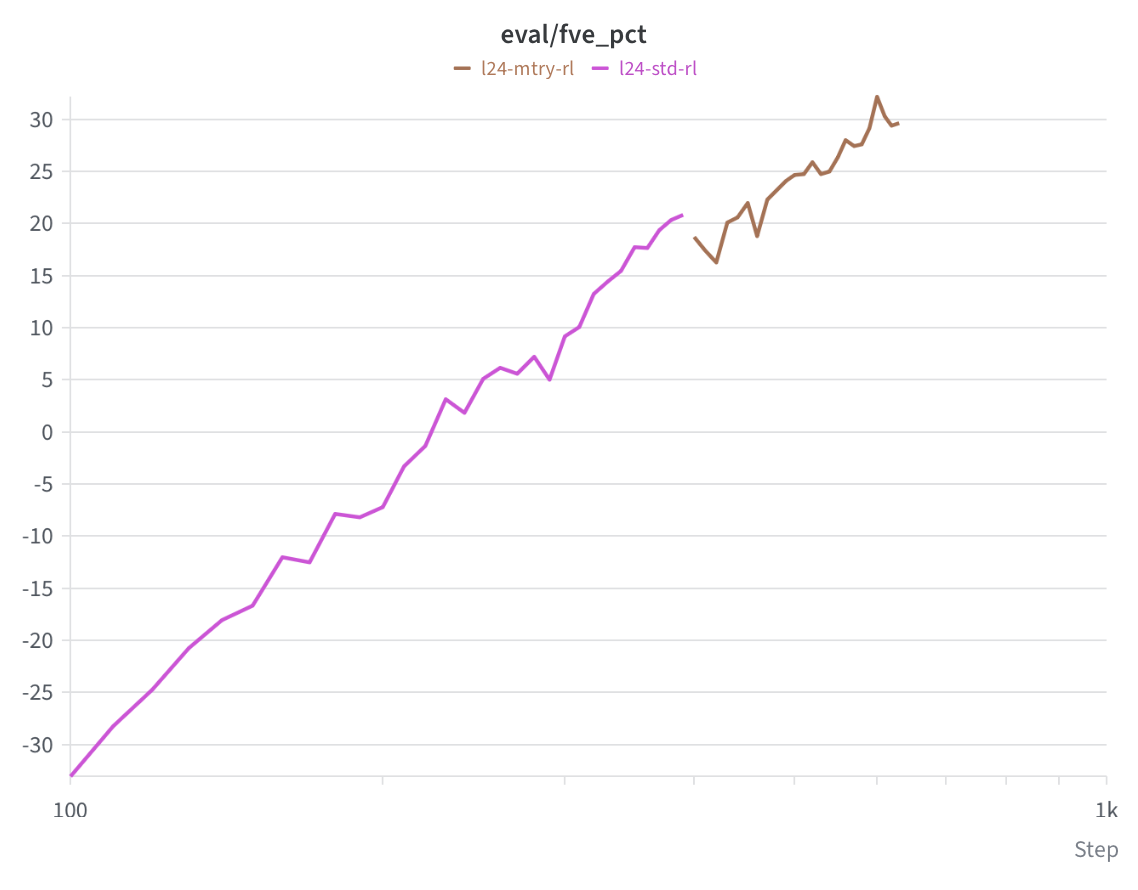
正在加载评论…